You may have received a ticket after turning into a driveway, alley, private road, parking lot, or property entrance. That can feel confusing because it may look different from a regular intersection ticket.
An NY VTL 1166 ticket is about where your vehicle was positioned before that kind of turn. In this article, we’ll break down what the ticket means, what the different charge codes cover, what penalties may follow, and what steps to take before deciding how to respond.
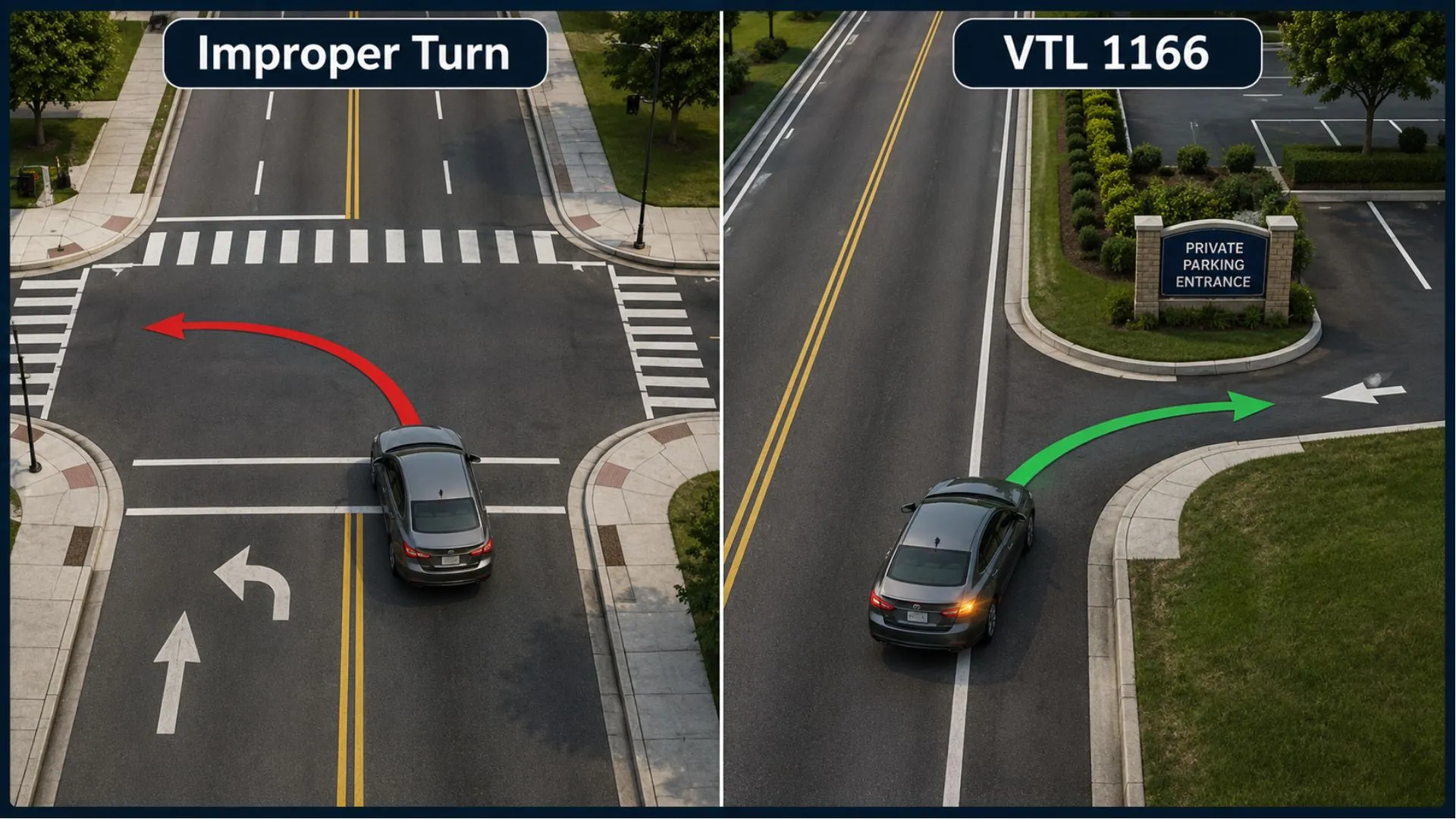
An NY VTL 1166 ticket means an officer believes you approached a turn from the wrong position before turning from a roadway into an alley, driveway, private road, or property off the roadway.
The important part is the approach. In other words, the law looks at where your car was before you turned. We usually tell drivers to think about it this way: the ticket is less about where you ended up and more about whether you were in the proper part of the road before making the turn.
The law covers three basic situations:
This is narrower than a general improper-turn ticket because it deals with turning off the roadway into private or access-related areas.
The exact code written on the ticket matters. It tells you what type of turn the officer says was improper. There are 3 DMV charge-code variants for VTL 1166. NY DMV lists 1166A for improper right turn, 1166B for improper left turn from a two-way roadway, and 1166C for improper left turn from a one-way roadway.
These are the three versions in simple terms.
| Code | What It Usually Means | What the Driver Is Accused Of | Simple Example |
|---|---|---|---|
| 1166A | Improper right turn | Approaching a right turn too far from the right curb or roadway edge | Swinging wide before turning right into a driveway |
| 1166B | Improper left turn from a two-way road | Approaching the left turn from the wrong part of the right half of the roadway | Turning left into a parking lot from too far right in the lane |
| 1166C | Improper left turn from a one-way road | Failing to use the far-left lawful lane before turning left | Turning left into a private road from a middle lane |
A 1166A ticket usually comes up when the officer believes the driver did not approach a right turn close enough to the right side of the road. A 1166B ticket focuses on a left turn from a two-way road. A 1166C ticket focuses on a left turn from a one-way road.
That code matters because it tells you which exact movement the officer says was improper. If the wrong subsection appears on the ticket, that can become an important detail to review.
These tickets often come down to a quick judgment call during a turn. You may feel the turn was normal. The officer may believe your car approached from the wrong lane position or created a risky movement.
These are the situations that can lead to this type of ticket:
We would avoid assuming that every wide turn automatically means guilt. Road design, parked cars, lane markings, traffic, and visibility can all affect how the situation looks.
A NY VTL 1166 ticket is related to improper turns, but it applies to a more specific type of turn. It covers turns from a roadway into places like driveways, alleys, private roads, parking lots, or property off the roadway.
Other New York turn-related tickets can cover different behaviors. For example, some tickets focus on turns at intersections. Others focus on whether you signaled properly before turning. VTL 1166 is about your vehicle’s required position before turning into an access point or property.
That is why we recommend reading the law section written on the ticket before deciding what to do. The exact code affects what the state must prove and how the ticket should be reviewed.
A NY VTL 1166 ticket is generally treated as a 2-point improper-turn violation if you are convicted. The NY DMV Traffic Violations Bureau point chart lists “Improper turn” as 2 points.
Those points do not hit your record just because the ticket was written. Points are added after a conviction. That can happen if you plead guilty or if you fight the ticket and are found guilty.
A single 2-point improper turn ticket that NY drivers receive may sound small at first. Still, it can matter if you already have recent points. New York can suspend a license at 11 points within 24 months. So if your record is already close to that range, even a lower-point ticket deserves attention.
Insurance is another concern. Insurance companies may review your driving record in their own way, so the practical cost of a conviction can go beyond the fine.
The final cost of a VTL 1166 ticket can include more than the base fine. You may also face a mandatory surcharge, possible court or administrative fees, and later costs if points affect your insurance.
The exact amount can vary by location and case details. A ticket handled through the NYC Traffic Violations Bureau may follow a different process than one handled in a town, village, city, or county court outside New York City. That is one reason we recommend checking the ticket itself before trusting a random fine estimate.
The Driver Responsibility Assessment is also worth understanding. A DRA starts at 6 points in 18 months. NY DMV says drivers who receive 6 or more points within 18 months must pay that assessment.
The 6-point assessment costs $300 over 3 years. NY DMV lists the fee as $100 per year for 3 years when a driver gets 6 points in 18 months.
VTL 1166 itself is usually a lower-point moving violation. The bigger issue is that it can push you closer to extra DMV fees if you already have other recent convictions.
The first step is to slow down and read the ticket carefully. Many drivers only look at the fine or court date. The smaller details can shape the next move.
These are the details we recommend checking first:
The deadline matters a lot. If you miss it, the ticket can become harder to deal with and may lead to extra problems. Before responding, we also recommend writing down what happened while the details are still fresh.
You should understand the points, fines, surcharges, deadlines, and possible insurance impact before pleading guilty to a NY VTL 1166 ticket. A guilty plea usually means you accept the violation as a conviction.
That may be fine in some situations, but we recommend reviewing the ticket first. The officer may have written the wrong subsection. The road layout may matter. Lane markings may have been unclear. Your approach position may be disputed. Another ticket from the same stop could also change the risk.
This does not mean every VTL 1166 ticket will be dismissed. It means you should avoid rushing to pay before you understand what you are accepting.
Yes, a VTL 1166 ticket can be fought, but whether it is worth fighting depends on the facts. The key issue is usually whether you approached the turn in the position required by the statute.
A strong review should focus on the actual movement, the road design, and what the officer could see. Small details can matter with this type of ticket.
These are the main details to review:
We recommend gathering those details as soon as possible. Photos, notes, and memories can become less useful as time passes. If you are unsure what evidence matters, Flickit’s guide on fighting traffic tickets with legal help explains how an attorney can review the case and handle the process.
Turns into driveways, alleys, parking lots, and private roads can create conflicts because other drivers may not expect the movement in the same way they expect a turn at an intersection. This is especially true when a driver swings wide, slows suddenly, crosses traffic, or turns from a confusing lane position.
That safety concern helps explain why these movements get attention. FHWA research on access management says about 72% of driveway crashes involve a left-turning vehicle. That stat does not mean your turn was dangerous. It does show why driveway and access-point turns can become important when police review a traffic movement.
For a VTL 1166 ticket, the issue is still specific. The question is whether your vehicle was positioned properly before the turn.
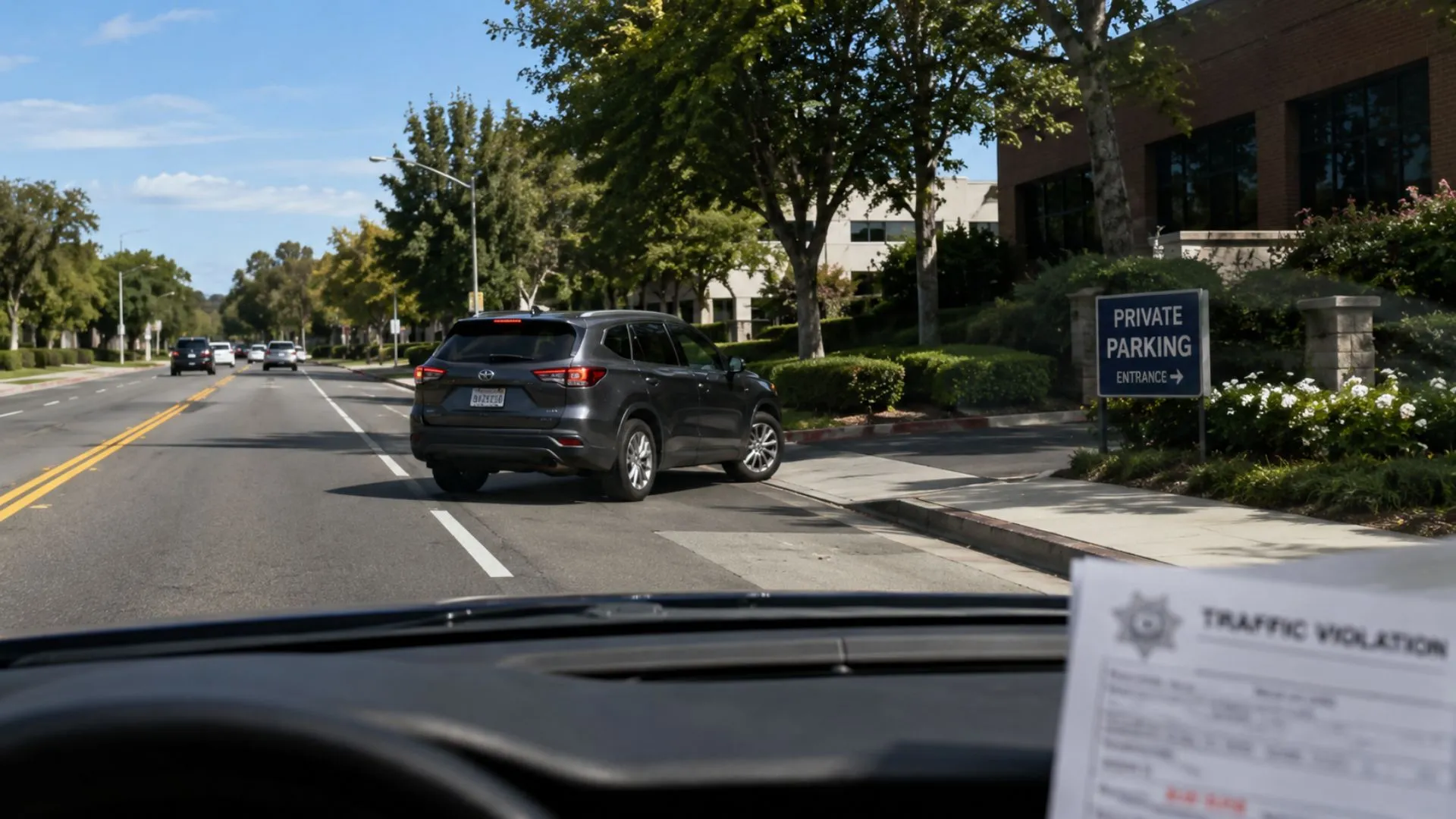
Flickit can help with an NY VTL 1166 ticket by reviewing the charge, looking at the details, and helping you decide how to respond. Flickit works with drivers who are dealing with moving violations and illegal turn ticket cases in New York, including tickets that may add points or create extra costs.
The process is simple. You upload the ticket, share what happened, and let the team review your options. Flickit’s brand is built around taking the stress out of traffic tickets, which matters when you are unsure whether to plead guilty or fight.
If you want help from a traffic ticket lawyer New York drivers can use without handling every step alone, Flickit gives you a practical place to start. We can help you understand the charge, review the possible impact, and work toward reducing the damage where possible.

 Call Now
 Whatsapp us