A NY VTL 1110(a) ticket is a citation issued to drivers who fail to obey an official traffic control device in New York State. This law is part of the Vehicle and Traffic Law (VTL) and is intended to ensure that all motorists follow posted traffic signs, signals, lane markings, and other traffic instructions. In simple terms, if you ignore a traffic sign, disobey a signal, or drive contrary to lane markings, you can receive a 1110(a) ticket. This can include actions like turning where a sign prohibits it, running a stop sign, driving in a bus-only lane, or ignoring a traffic light. In this complete guide, you will learn what VTL 1110(a) means, how it is used in real situations, and the smartest way to handle it.
New York Vehicle and Traffic Law 1110(a) requires drivers to obey all official traffic control devices unless directed otherwise by a police officer. In simple terms, if you ignore a sign, signal, or road marking, you can be cited. While the ticket usually carries 2 points on your driving record and fines ranging from about $138 in New York City to $243 outside the city, it can also be part of a plea deal or roadside reduction, making it an important ticket to handle strategically.
You may receive this ticket if you:
What makes VTL 1110(a) unique is its breadth. Unlike a speeding ticket or a red light violation, this statute is considered a catch-all for moving violations because most types of non-compliant driving actions can fall under it.
The statute states that drivers must follow all official traffic control devices placed according to the law. What makes this important is its breadth. A speed limit sign is also a traffic control device. That means even speeding can fall under this law in certain situations. This is one reason VTL 1110(a) is often called a catch-all violation.
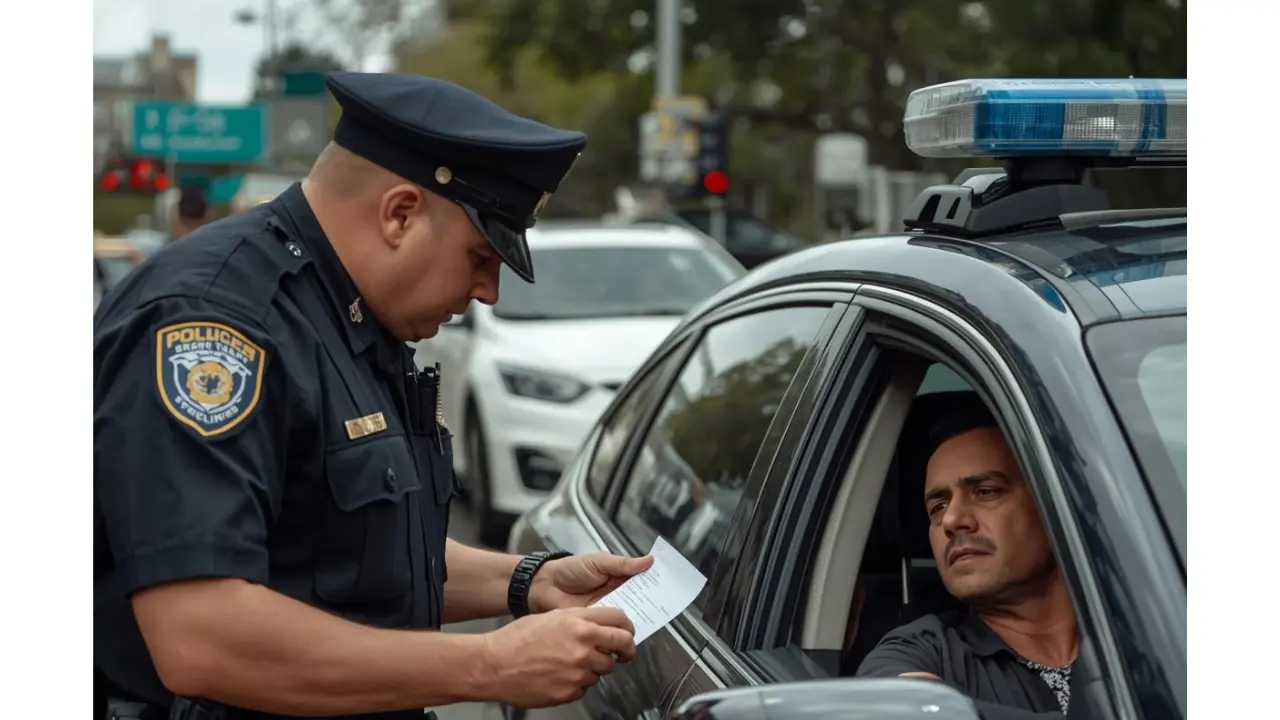
One of the most important insights is that this ticket is often used as a roadside reduction. For example, you might be pulled over for speeding, but instead of receiving a speeding ticket, the officer issues a VTL 1110(a) citation. This often happens because a 1110(a) ticket carries fewer points than most speeding violations, lower fines, and less impact on insurance, while also allowing for a faster resolution in court. In many cases, this works in the driver’s favor, though it is still considered a moving violation that can affect your driving record.
If you contest a speeding ticket, you may be offered a plea deal to reduce it to a VTL 1110(a) citation. Courts often prefer this because it avoids more serious penalties, is easier to prove, and does not require stretching the facts. For instance, if you were speeding, you were technically disobeying a speed sign, which is considered a traffic control device. This is why many drivers accept this reduction, as it is often the most practical outcome in a New York traffic ticket dispute.
Yes, and this is where things get interesting.
Both charges may be technically correct, but they are based on the same action. This is known as redundant charging, and it can be challenged in court.
Final amounts depend on the court and circumstances.
According to the New York DMV, points can lead to additional penalties and long-term consequences.
Even a 2-point violation can increase your premiums. Insurance companies often view repeated violations as risky behavior. This is why many drivers look for ways to avoid points on their license. In one case, a driver in Queens made a right turn at an intersection, believing it was allowed, only to find that a partially blocked No Turn on Red sign led to a VTL 1110(a) ticket. The citation carried a fine and surcharge, added 2 points to the driver’s license, and contributed to an insurance premium increase months later. This example shows that even minor misunderstandings can result in long-term costs, and taking action early can make a significant difference.
You are not required to accept the ticket. Many drivers successfully challenge it.
If the sign was not clearly visible, the ticket may not hold up.
Traffic control devices must meet legal standards. If they do not, enforcement may be invalid.
If the officer could not clearly see your action, the case can be challenged.
If you received multiple tickets for the same act, one may be dismissed.
If you acted to avoid danger, your actions may be justified. These strategies are often used in speeding ticket defense and apply here as well.
You should strongly consider fighting if:
If none of these apply, accepting a reduced charge may sometimes be the practical choice.
Handling a ticket on your own can take time and effort.
A white-glove ticket service like FlickIt simplifies the process.
For commercial drivers, services like Trucking Pro ticket service can be especially useful.
| Violation | Key Difference |
|---|---|
| Speeding ticket | Higher points and fines |
| Red light camera | No points in most cases |
| DUI ticket help cases | Criminal level penalties |
| Parking violations | Usually no points |
If you want to take action right away:
This process is designed to help you fight your ticket without the stress.
A VTL 1110(a) ticket may seem minor, but it plays a unique role in New York traffic law. It is widely used, flexible, and often part of negotiation strategies in court. That also means you have options. Whether you choose to fight it or accept a reduction, the key is understanding how the system works and acting early. If you had the chance to reduce points, avoid insurance increases, and save time, would you take it Explore your options today at FlickIt and take control of your ticket before it costs you more

 Call Now
 Whatsapp us