Seeing VTL 509(5) or charge code 5095 on a citation can be confusing because this is a fairly uncommon New York license violation. A NY VTL 509-5 ticket generally concerns having more than one unexpired license issued by the New York DMV at the same time.
That sounds simple at first, yet the status and type of each credential matter. So, today, we’ll break down what the law covers, the exceptions, possible penalties, and the practical steps to consider after receiving the ticket.
A VTL 509(5) ticket is issued for holding more than one unexpired license issued by the New York DMV at the same time.
The DMV uses charge code 5095 and describes the violation as “holding more than 1 NYS license.” It sits within a much broader group of New York traffic violation codes, yet this particular charge appears relatively rarely.
From 2022 through 2025, New York issued 1,089 tickets under § 509(5). That represented about 0.0096% of the 11.37 million traffic tickets issued statewide during the same period.
There is also an important exception built into the statute. A person may hold a license for one class and a learner permit for another class without violating § 509(5).
Holding more than one New York license generally means having two unexpired NY-issued licenses at the same time.
The important detail is the legal status of each credential when the ticket was issued. From our perspective, that is one of the first things worth checking because two physical cards do not always tell the whole story.
Here are the main situations to review:
So before drawing conclusions from the ticket, look closely at what each credential actually was and whether it remained valid on the date of the citation.
VTL 509(5) deals with multiple unexpired licenses issued by New York, while VTL 509(10) addresses a New York license held alongside a license from another jurisdiction.
This distinction can easily get lost because both charges involve more than one driver’s license. Yet the source of the second license changes which subdivision may apply.
Here are the situations side by side:
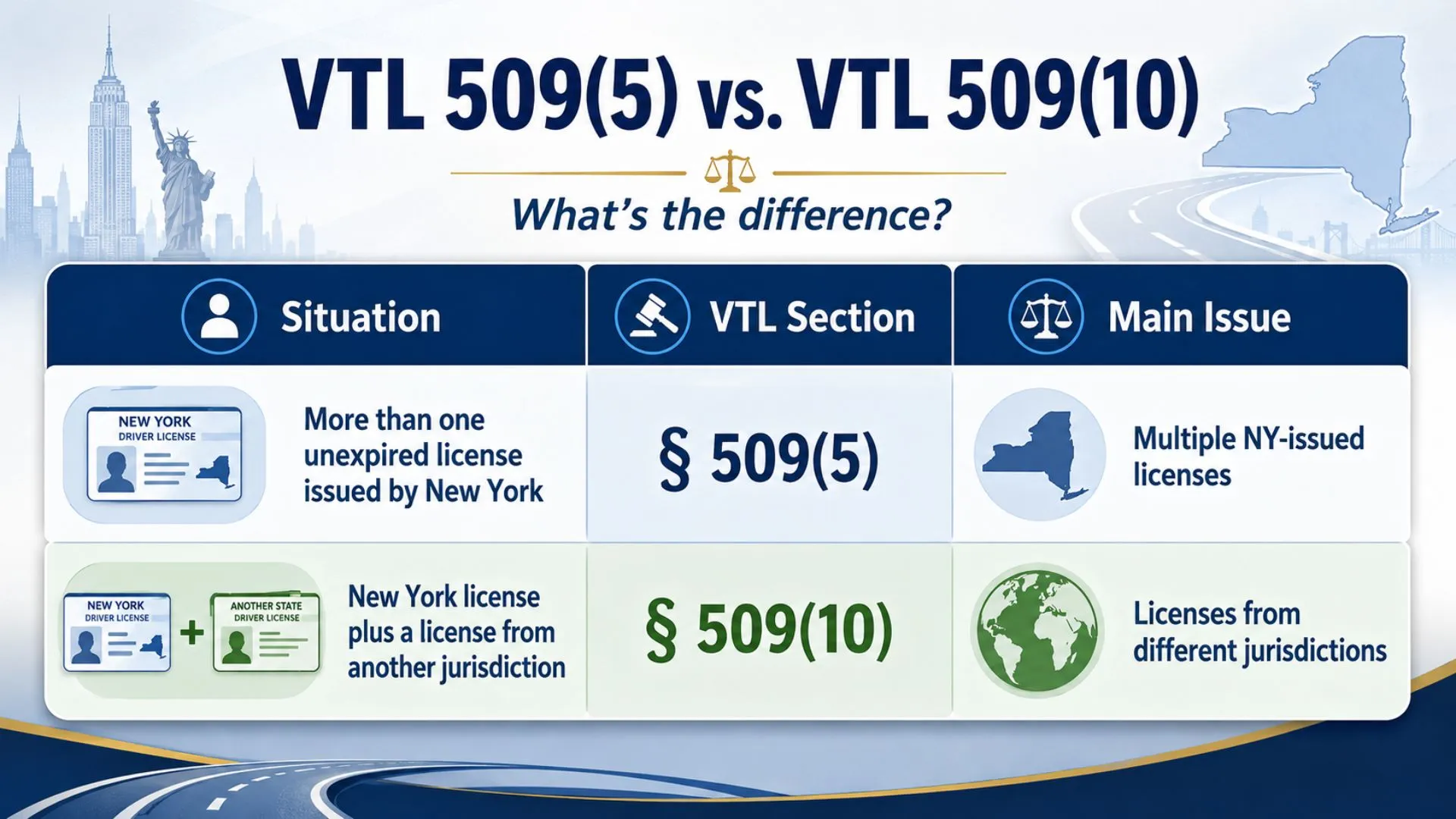
That means someone with a New York license and a New Jersey, Pennsylvania, Florida, or other out-of-state license should carefully check which charge actually appears on the ticket.
The distinction also shows up in enforcement data. New York issued 1,259 tickets under § 509(10) from 2022 through 2025, compared with 1,089 under § 509(5). Section 509(10) therefore produced 15.6% more tickets during that period.
According to the New York State Senate, a VTL 509-5 conviction can carry a fine of $75 to $300, up to 15 days in jail, or both under VTL § 509(11).
That statutory range gives the reader the outer boundaries of the penalty. The actual result can still depend on the court, case disposition, and other circumstances.
Here are the main consequences to understand:
We also recommend avoiding assumptions about insurance, suspension, or broader license consequences until those issues are checked against the specific case.
After receiving a VTL 509-5 ticket, review the citation, identify every license or permit involved, preserve your records, and understand your options before entering a plea.
This charge depends heavily on details such as who issued each credential and whether it was still unexpired. Because of that, a little preparation can make the situation much easier to understand.
Here are the steps we would focus on first:
Check the statute, charge code, court, response deadline, and any instructions printed on the citation. If you are unsure what each field means, Flickit’s guide to what information is on a traffic ticket can help you read the document more carefully.
Make a simple list of the credentials in your possession. Note which were issued by New York, whether another jurisdiction issued any of them, and whether each credential was expired or unexpired on the ticket date.
Compare your circumstances with the actual subdivision listed on the citation. Two NY-issued licenses and one New York license plus an out-of-state license are treated under different provisions.
Keep the ticket, licenses, permits, DMV letters, replacement-license records, surrender documentation, and other paperwork that may clarify the history of the credentials.
Paying the ticket or pleading guilty can lead to a conviction. We think it makes sense to understand the possible consequences first rather than treating an unfamiliar license ticket as routine.
An attorney can review the citation alongside the actual credential history and court information. Our other guide also explains how a traffic attorney can help when a driver is deciding how to respond to a citation.
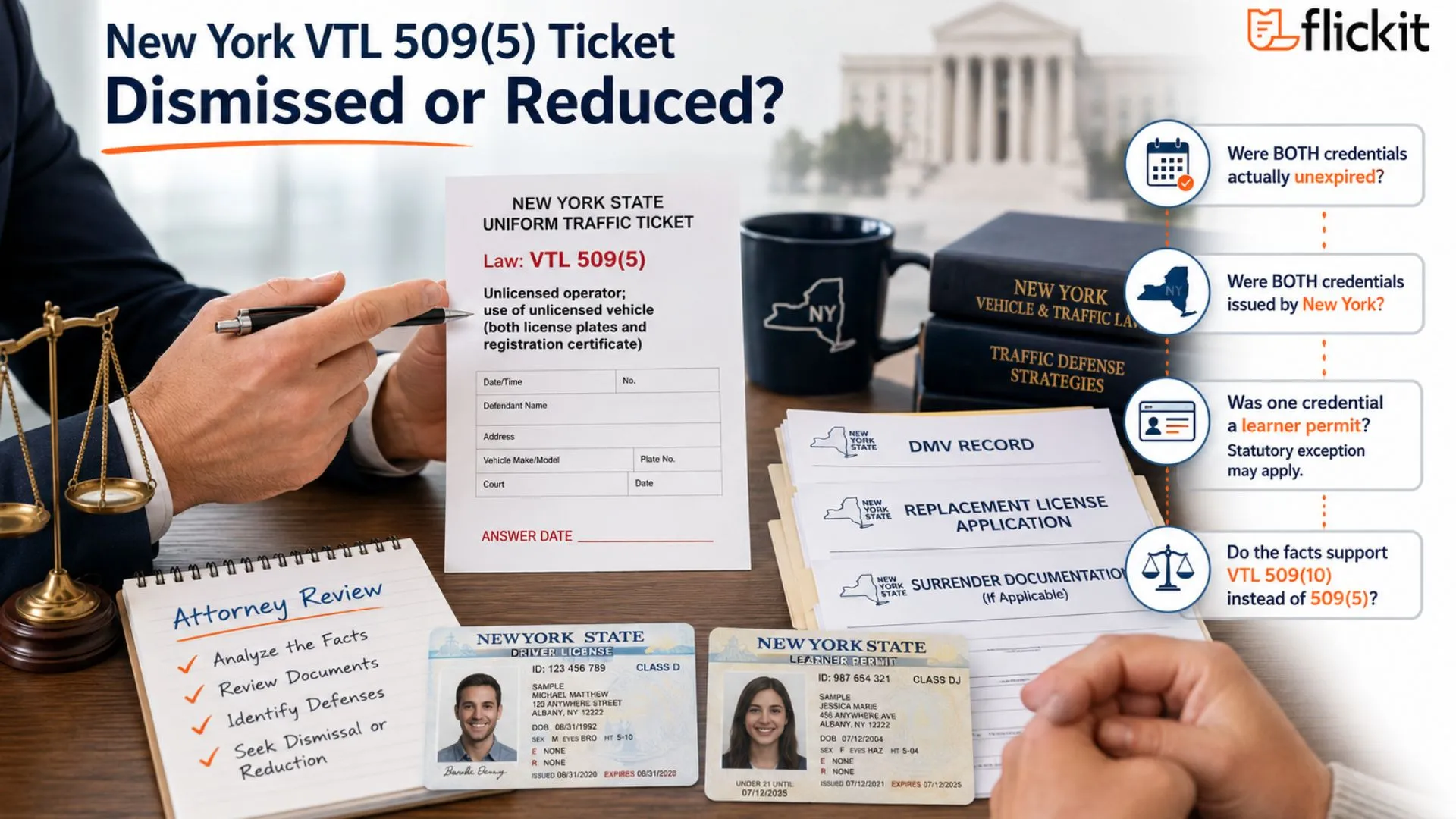
A VTL 509-5 ticket may sometimes be dismissed or reduced. Although the possible outcome depends on the facts, available records, court, and way the case is resolved.
Several details may deserve a closer look. One is whether both credentials were actually unexpired when the ticket was issued. Another is whether both came from New York. The status of a learner permit may matter as well because the statute includes a specific exception.
The charge should also be compared with § 509(10) when another jurisdiction issued one of the licenses. DMV records, replacement-license paperwork, or surrender records may help clarify what happened.
And if the driver later corrects the license issue, that step does not automatically erase a citation that has already been issued.
Flickit can review your VTL 509(5) ticket and the circumstances behind it so you can better understand your options before deciding how to proceed.
You can submit the ticket and explain what happened, including details about the licenses or permits involved. From there, our team can review the situation and help determine the next steps. When Flickit takes on a case, we provide traffic-ticket legal representation and can help with legal paperwork, case strategy, and court representation when appropriate.
If you want case-specific help, working with a New York traffic ticket lawyer can give you a clearer picture of how the charge applies to your circumstances.
Submit your VTL 509(5) ticket to Flickit so our team can review the details and walk you through the available next steps.
Fixing the duplicate-license issue does not automatically cancel an existing ticket. Correcting the credential situation may still provide useful context or documentation, so keep proof of what you did and continue following the response instructions on the citation.
A VTL 509-5 ticket is handled through the court or adjudication system identified on the citation, based largely on where it was issued.
From 2022 through 2025, 91.9% of recorded § 509(5) tickets went through the TSLED court-processing system, while 8.1% were associated with the TVB system. Your own ticket remains the best source for where and how you need to respond.

 Call Now
 Whatsapp us