A citation and a ticket are not the same, especially under New York and New Jersey traffic laws. A citation is a broad legal notice that can cover parking violations, equipment issues, or warnings, while a traffic ticket usually refers to a moving violation that can lead to fines, points on your license, court appearances, and higher insurance premiums.
Many drivers searching for a New York traffic ticket dispute or a NJ traffic ticket lawyer only realize the difference after getting pulled over or finding a notice on their windshield. Knowing whether you received a citation or a ticket helps you decide how to respond and whether to fight it before penalties add up.
Traffic violations can be confusing, especially when you receive official paperwork from law enforcement. While the terms citation and ticket are often used interchangeably, they differ in severity, consequences, and how they affect your driving record and insurance.
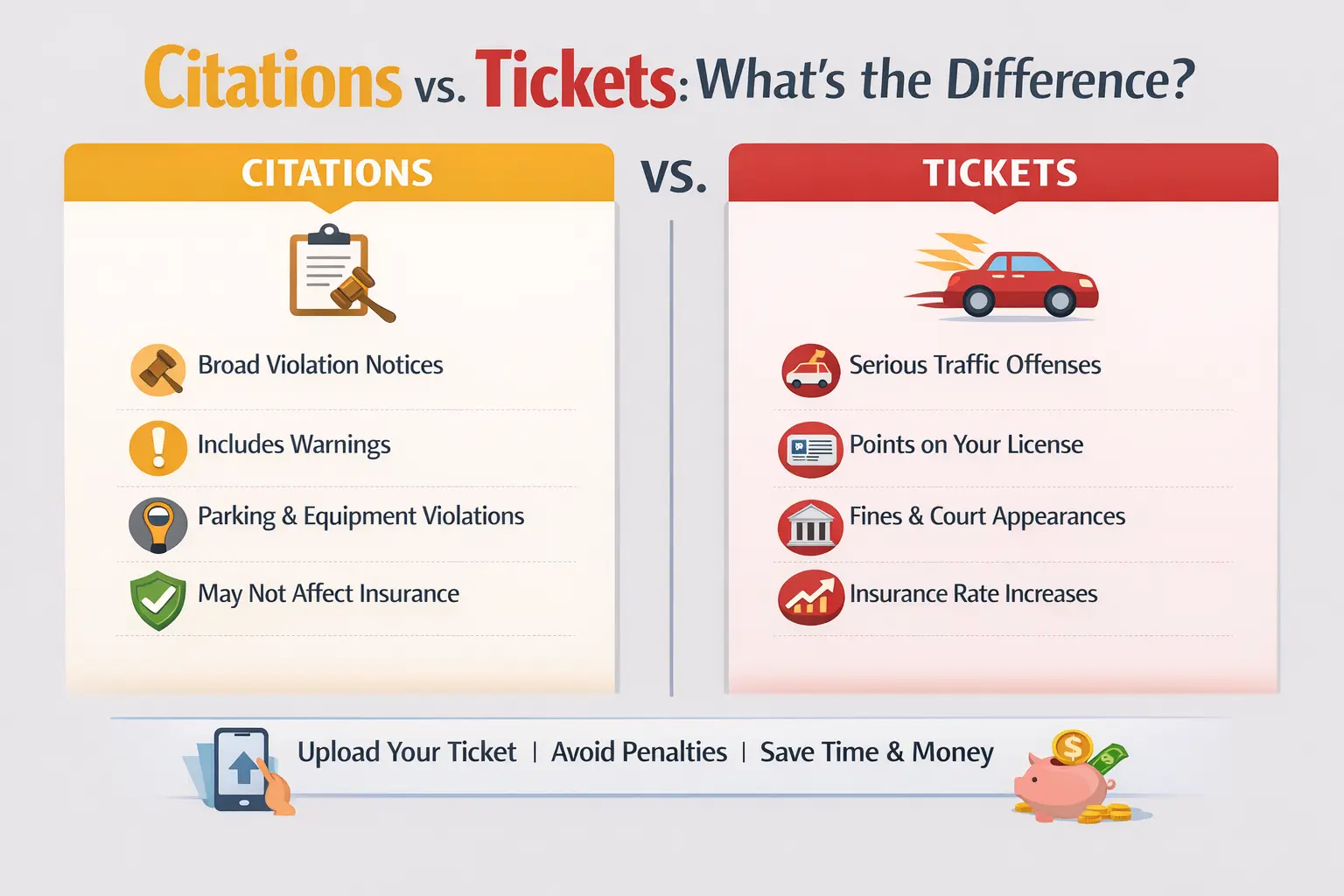
| Feature | Citation | Ticket |
| Definition | A broad violation notice issued for breaking a law | Legal notice for a moving violation |
| Types | Warnings, parking violations, equipment issues | Speeding, running red lights, DUI, reckless driving |
| Impact on Driving Record | Usually no points; minor violations may not appear on record | Points may be added; can affect license status |
| Insurance Impact | Often no effect | Can increase insurance rates depending on severity |
| Court Requirement | Usually not required | May require a court appearance for serious violations |
| Penalty | Small fines or corrective action for minor violations | Fines, possible license suspension, or other penalties |
The table below provides a clear side-by-side comparison to help you quickly understand the differences.What is a Traffic Ticket?
A traffic ticket is a legal document issued by a law enforcement officer or a police officer when a driver violates traffic laws. Tickets typically result from moving violations such as:
Traffic tickets can affect your driver record, insurance premiums, and may require a court appearance. You may also have to go to criminal court for more serious criminal charges or other traffic offenses. Ignoring a ticket can lead to fines, points, license suspension, or even warrants. Furthermore, failure to appear in court can result in other charges.
A citation is a broader legal term referring to any official notice issued for violating a law. In traffic contexts, citations include:
All traffic tickets are citations, but not all citations are tickets. While tickets usually impact your driving record, some citations, such as minor parking violations or written warnings, may not.
Learn more about NY traffic ticket dispute procedures for detailed guidance.
These are generally more serious and include:
Moving violations often carry points on your license and may increase insurance rates. Severe violations may require court appearances or SR-22 filings.
These include:
Non-moving violations usually do not affect insurance rates or points, but still require payment or correction. Failure to pay using your court case number may even result to license revocation.
For minor infractions or first-time offenses, officers may issue a verbal or written warning instead of a ticket. Warnings do not affect your driving record but signal that changes are needed to avoid future penalties.
You can also see our guide on How to fight speeding tickets to understand your options.
A traffic citation will typically include:
Knowing these details is important for responding accurately and in a timely manner. Learn more about avoiding points on your license for helpful strategies.
A citation for a moving violation generally affects your insurance rates. Minor infractions like a single speeding ticket may have a small impact depending on your state. More severe violations, multiple tickets, or a DUI can significantly increase premiums.
Non-moving violations, such as parking tickets, usually do not affect insurance rates.
Drivers with severe or multiple citations may be required to file an SR-22 form with their state DMV to prove insurance coverage minimum.
For official statistics and auto insurance claim information, see the National Highway Traffic Safety Administration for data on traffic violations and their impact.
Flickit is a professional traffic ticket solution designed to simplify the process and protect your driving record. Benefits of using Flickit include:
By submitting your ticket to Flickit (Upload your ticket now), you can resolve citations faster, avoid penalties, and reduce stress.
Case Example: Maria in New Jersey received a parking citation. Initially, she assumed a court appearance was required. Using Flickit, she resolved her citation online without affecting her record or paying unnecessary fees.
Understanding the difference between a citation and a ticket is critical for protecting your driving record, avoiding unnecessary fines, and managing insurance impacts. All tickets are citations, but citations can include minor warnings or non-moving violations. Acting promptly, knowing your options, and leveraging a professional service like Flickit can save time, money, and stress.
Take Action Today: Submit your ticket to Flickit and ensure your driving record stays clean.

 Call Now
 Whatsapp us