A ticket over a plate frame, clear cover, coating, or bike rack can feel strangely specific. Still, an NY VTL 402b ticket deserves quick attention because New York has several related plate rules. The exact subsection affects the fine and correction process. We’ll break down the prohibited conditions, possible penalties, dismissal rules, and practical steps you can take next.
A NY VTL 402-b ticket usually means an officer believes your license plate was covered, coated, or blocked by part of the vehicle or something carried on it. The plate rules appear in VTL § 402(1)(b), while § 402-b explains how officers enforce certain violations and how drivers may correct them and request dismissal.
This process applies to subsections (ii), (ii-a), and (iii), and it took effect on September 1, 2024. Your ticket may list one of these subsections instead of § 402-b itself. A plate that is simply dirty or difficult to read usually falls under subsection (i), which has different penalties and falls outside § 402-b’s special correction process.
A cover, coating, frame, vehicle part, or carried item can lead to a 402-b ticket if it obscures the plate. The law separates these conditions into several categories. That distinction matters because the correction process does not cover every plate violation.
| Subsection | Prohibited condition | Common examples | Covered by § 402-b correction process? |
|---|---|---|---|
| § 402(1)(b)(i) | Plate is not clean or easily readable | Snow, dirt, grime, rust, peeling plate | No, based on the section’s strict wording |
| § 402(1)(b)(ii) | Plate is knowingly covered or coated by something that conceals, obscures, or distorts its recorded image | Reflective spray, film, coating, intentional material | Yes |
| § 402(1)(b)(ii-a) | Glass or plastic cover, or material made to look like a lawfully issued plate | Clear cover, tinted cover, fake plate overlay | Yes |
| § 402(1)(b)(iii) | Plate is obstructed by the vehicle or something carried on it | Frame, bumper, bike rack, spare tire, hitch, cargo | Yes |
Under New York law, even a clear plastic cover can lead to a license plate cover ticket. The cover may violate § 402(1)(b)(ii-a) even when the registration number remains easy to read. Separately, the physical-obstruction rule has one express exception for a publicly owned toll-facility transponder mounted according to the facility’s instructions.
New York is paying more attention to obscured plates because covered and altered plates can interfere with camera identification, toll collection, and vehicle accountability. The direct ticket numbers show how common these cases have become.
A 2026 NYC Comptroller audit found that 1,076,182 captured incidents, or 22%, were rejected during January through June 2023 because of ghost plates or covered plates. That audit covered a broader group of plate problems than VTL 402-b alone. Still, it helps explain the stronger enforcement focus.
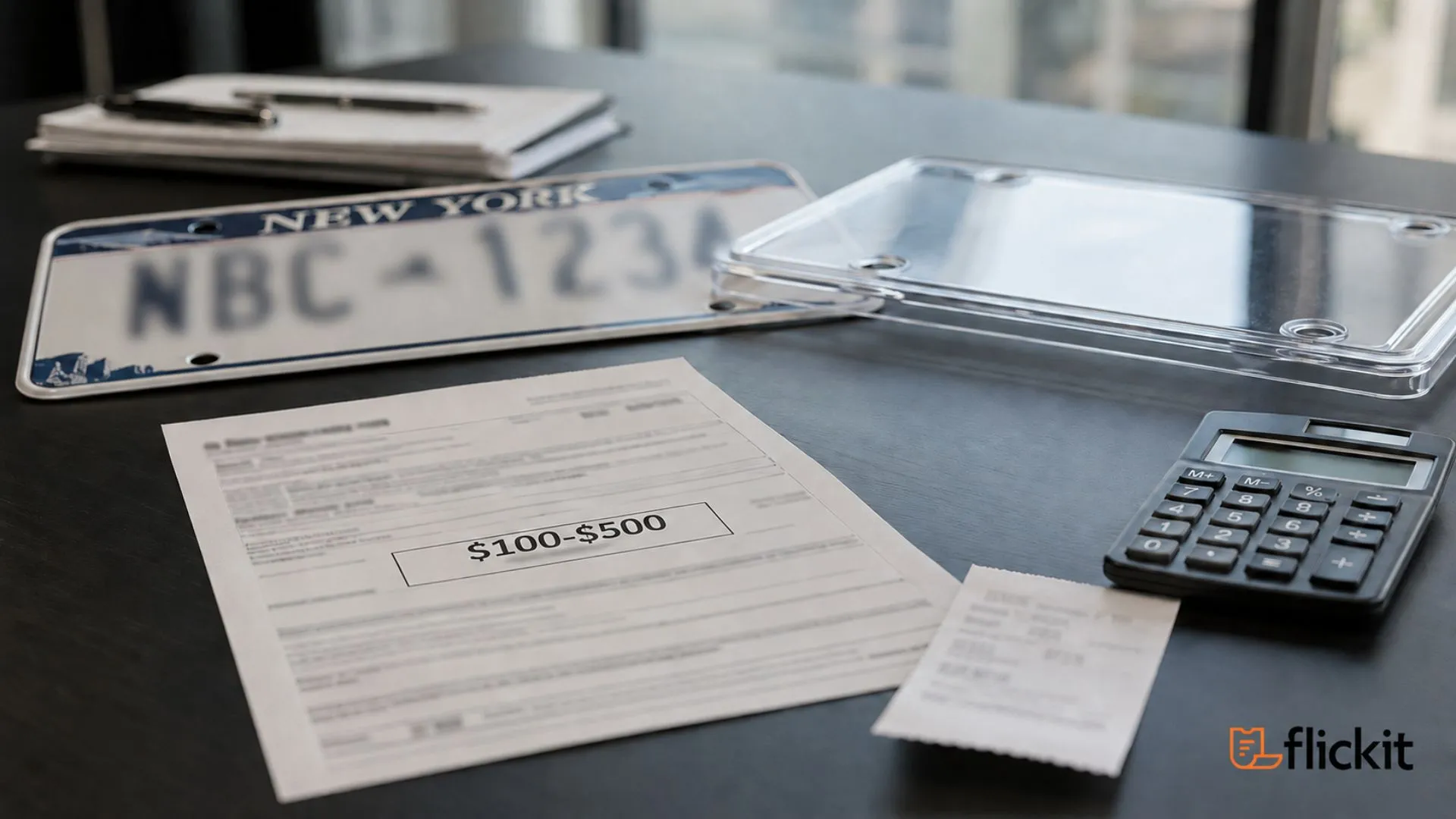
A conviction under one of the plate violations covered by § 402-b carries a base fine between $100 and $500. This range applies to violations committed on or after September 1, 2024. State surcharges may increase the final amount owed, and repeat convictions can create registration problems.
Here are the main consequences:
Zero points generally makes this less serious than a point-bearing moving violation. Still, we would avoid guaranteeing how an insurer will treat a driver’s full record or policy. Our guide to how traffic tickets can affect insurance rates explains the broader factors insurers may review.
Yes, a court or administrative tribunal may dismiss a 402-b ticket if the qualifying condition is corrected within the required period and acceptable proof is submitted. The opportunity can start during the traffic stop. An officer may ask the driver to correct the condition immediately and then decide against issuing a summons.
However, the driver has no legal right to demand that roadside opportunity. Once a summons is issued, the defect must be corrected no later than 30 minutes after sunset on the first full business day following issuance. Saturdays, Sundays, and holidays named in the statute are excluded when that business day is calculated.
The driver must then submit proof to the court or tribunal. The statute says the complaint may be dismissed, which leaves the final decision to that authority. This correction route expressly covers subdivisions (ii), (ii-a), and (iii).
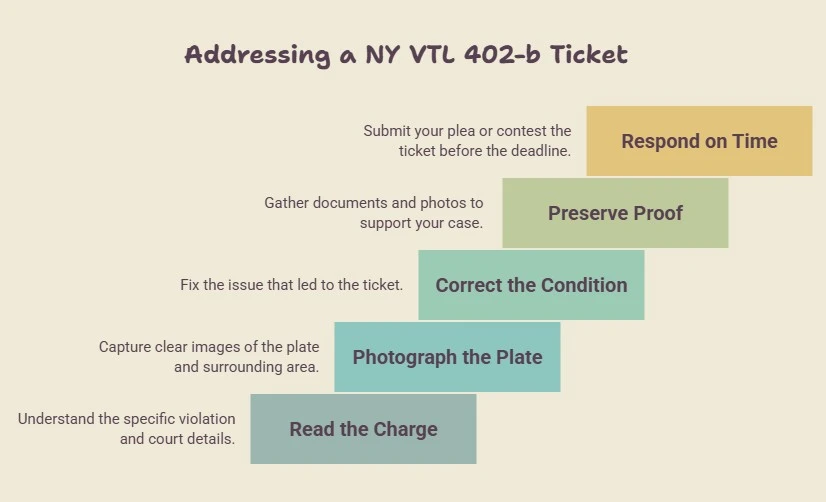
After receiving a NY VTL 402-b ticket, check the charge, document the plate, correct the condition quickly, preserve proof, and respond on time. The correction window can pass fast. A few photos and records may also become important later.
Here are the five steps we recommend.
Check if the ticket lists subsection (i), (ii), (ii-a), or (iii). Then review the date, location, court, officer’s description, and response deadline.
Take wide and close-up photos of the plate, frame, cover, coating, and nearby vehicle equipment. Include any item the officer claimed was blocking the plate. Save relevant dashcam footage as well.
Remove the cover or frame, reposition the rack or cargo, clean the plate, or request a replacement plate. Complete the correction within the statutory period if your charge qualifies.
Keep dated photos, receipts, DMV paperwork, and other records that show what you fixed and when. Ask the named court which proof it accepts and how you should submit it.
Follow the instructions for pleading guilty or contesting the charge. If you ignore the ticket, additional penalties and administrative problems may follow.
Yes, you can fight a VTL 402-b ticket, although the strength of the case depends on the subsection, photographs, officer’s account, and correction records. Small details matter here. We recommend reviewing the full plate and the exact conduct described on the ticket. Before choosing how to respond, it also helps to understand what happens if you fight a traffic ticket and lose.
When we review an obstructed license plate ticket NY case, these details may matter:
New York court decisions show how small details can shape these cases.
In People v. Jones, a bracket covered “Empire State” and other plate information, although the registration number remained readable. In People v. Dula, a dealer frame covered “Garden State” on a New Jersey plate and supported the traffic stop. In People v. Hayes, the officer failed to explain clearly how the plate was altered or obscured.
Each case had different facts, but together they show why photos and specific descriptions can matter.
No, a moving 402-b ticket and an NYC parking ticket follow separate penalty and hearing processes. Section 402 treats a plate violation involving a parked vehicle as a parking violation. NYC’s current rule allows a $50 fine for parking with an obscured plate.
That city penalty is separate. Covered moving-ticket subsections carry a $100 to $500 statutory range. NYC moving tickets generally go through the DMV Traffic Violations Bureau, while parking citations use the city’s parking-ticket system.
If your citation was issued while the vehicle was parked, read more about what can make an NYC parking ticket invalid. Then follow the venue and instructions printed on your citation.
At Flickit, we help drivers review plate-related tickets and decide how to respond. You can upload a photo of your citation and tell us what happened. Our team can then review the subsection, court, deadline, plate condition, and available evidence.
We can also discuss correction records, possible dismissal options, and issues that may support a defense. After you sign a formal retainer, our team can handle the legal and administrative process. We provide case updates and can represent you in court when the venue permits it.
Since this violation generally carries zero DMV points, our review focuses on the charge, fine, correction deadline, evidence, and possible registration impact. If you need an NY traffic ticket lawyer, contact us and upload your ticket to Flickit. We’ll review the details, explain your options, and help you decide what to do next based on the facts of your case.
Yes, a dealer license plate frame can cause a ticket if it covers any part of the plate. That includes the state name, slogan, registration number, or other identifying information.
Yes, a bike rack can lead to a ticket when it blocks the plate’s view. Subsection (iii) covers obstructions caused by the vehicle or anything carried on it.
Yes, an owner may be liable if the owner knowingly caused or permitted the vehicle to be operated, driven, or parked with a plate condition that violates § 402.

 Call Now
 Whatsapp us