A NY VTL 1111(d)(1) ticket can look confusing when you first see the code on paper. In most cases, it means you were cited for a red signal violation.
Wondering what it is for? We’re here to help you!
In this article, we’ll break down what this ticket means, why it matters, and how points, fines, camera tickets, and NYC right-on-red rules can affect your next step. You’ll also see why paying it right away may create problems you did not expect.
A NY VTL 1111(d)(1) ticket is a New York red-light ticket that usually means an officer believes you failed to obey a steady red traffic signal.
Under this rule, a driver facing a steady red light must stop at the marked stop line. If there is no stop line, the driver must stop before the crosswalk. But if there is no stop line or crosswalk, the driver must stop before entering the intersection at a point where traffic can be seen safely.
The driver also has to stay stopped until the signal allows traffic to move again. That part matters because the ticket may involve more than driving straight through a red light.
On your ticket, this violation may appear as:
We recommend reading the exact code and description carefully before assuming what happened.
Many drivers get this ticket after a quick judgment call at an intersection. The facts matter because a few seconds can change how the ticket is viewed.
These are the most common situations that lead to this type of ticket:
These points do not automatically beat the ticket. We think you should treat them as facts to review before deciding what to do.
According to NY DMV, a VTL 1111(d)(1) conviction usually adds 3 points to a New York driving record.
That point detail is important because the ticket itself does not add points the day it is issued. Points usually come after a conviction. That can happen after a guilty plea, a finding of guilt at a hearing, or another final case result that leaves the violation on your record.
NY DMV also says New York drivers can face license suspension after reaching 11 points within 24 months. That makes one 3-point red-light ticket more serious for drivers who already have points from recent tickets.
A single 3-point conviction may feel manageable by itself. It can become a bigger issue when combined with recent speeding, cell phone, stop sign, or other moving violations.
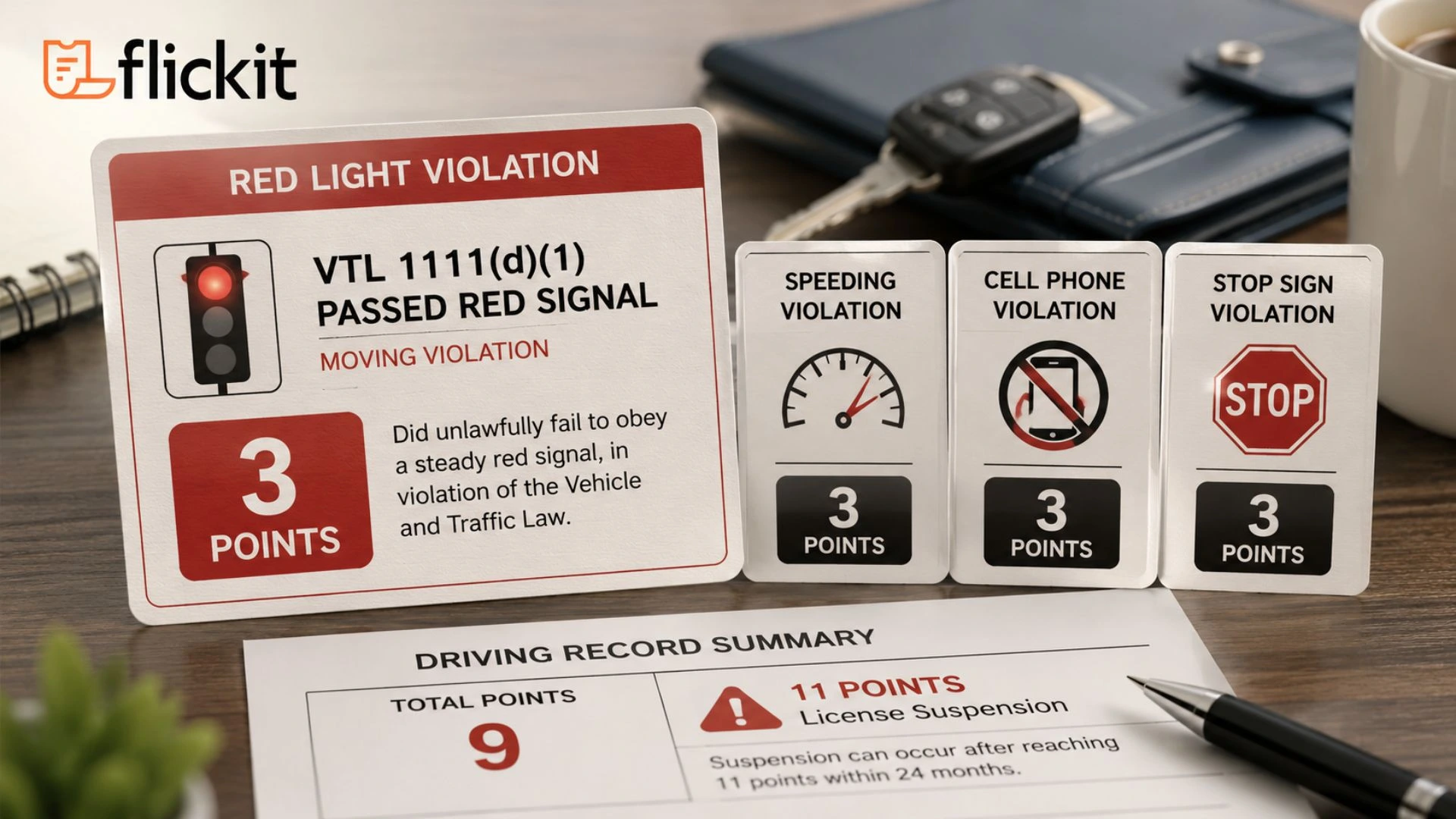
The costs after a VTL 1111(d)(1) ticket can include the fine, mandatory surcharge, possible Driver Responsibility Assessment, and possible insurance impact.
The final amount can vary based on where the ticket was issued, the driver’s record, the court or agency handling it, and whether the case is in NYC TVB or a local court outside New York City. We believe you should avoid judging the ticket by the base fine alone because the real cost can stretch beyond that.
NY DMV says the Driver Responsibility Assessment applies when a driver reaches 6 or more points within 18 months. That means two 3-point tickets can trigger extra DMV costs.
At 6 points, New York’s Driver Responsibility Assessment costs $100 per year for 3 years, or $300 total. That is separate from the ticket fine, surcharge, and any insurance increase that may follow.
This is why a VTL 1111(d)(1) fine can feel larger than expected. The ticket may start as one red-light charge, yet the long-term cost depends on your full driving record.
Drivers usually mix up officer-issued red-light tickets and camera notices. Both involve red lights, but they work very differently.
This distinction matters before you pay, fight, or ignore anything. These are the key differences:
| Issue | Police-Issued VTL 1111(d)(1) Ticket | Red-Light Camera Ticket |
|---|---|---|
| Who receives it | Driver | Registered vehicle owner |
| Points | Usually 3 after conviction | 0 points |
| Fine | Can be higher and vary by case | Usually $50 in NYC |
| Record impact | Can affect driving record | Usually no driving-record points |
| Process | TVB or local court | Camera/parking-style process |
| Best next step | Review ticket before pleading | Review notice/video and payment/dispute options |
A NYC red light ticket from an officer is usually treated as a moving violation. But a red light camera ticket NY notice is usually handled more like an owner-liability camera violation.
According to NYC311, a NYC red-light camera ticket carries a $50 fine. That is usually lower than the cost of an officer-issued red-light moving violation.
NYC311 also says NYC red-light camera tickets carry 0 license points. That means they affect the vehicle owner differently than a police-issued red light ticket.
NYC right turns on red cause confusion because right on red is generally illegal in New York City unless a posted sign allows it.
This trips up drivers from Long Island, New Jersey, Upstate New York, and other states. In many places, a driver can stop at a red light, yield, and turn right unless a sign says otherwise. In NYC, that habit can lead to a right turn on red NYC ticket.
Here is a simple example: A driver stops at a red light in Queens, sees no traffic, and turns right. An officer pulls the driver over. The issue may be the turn itself, even though the driver stopped first.
That is why we recommend treating NYC intersections differently. If there is no sign that clearly allows right on red, assume the turn can get you cited.
If you ignore the ticket, the problem can grow into missed deadlines, added fees, default consequences, and possible license trouble.
The first step is to check the deadline on the ticket. Then identify whether it is a TVB ticket, a local court ticket, or a camera notice. Each one has a different response process.
You should never assume the ticket will disappear because you live out of state or because the stop seemed minor. New York can still take action if the ticket is left unanswered.
Here are the practical steps to take right away:
Timely action gives you more options.
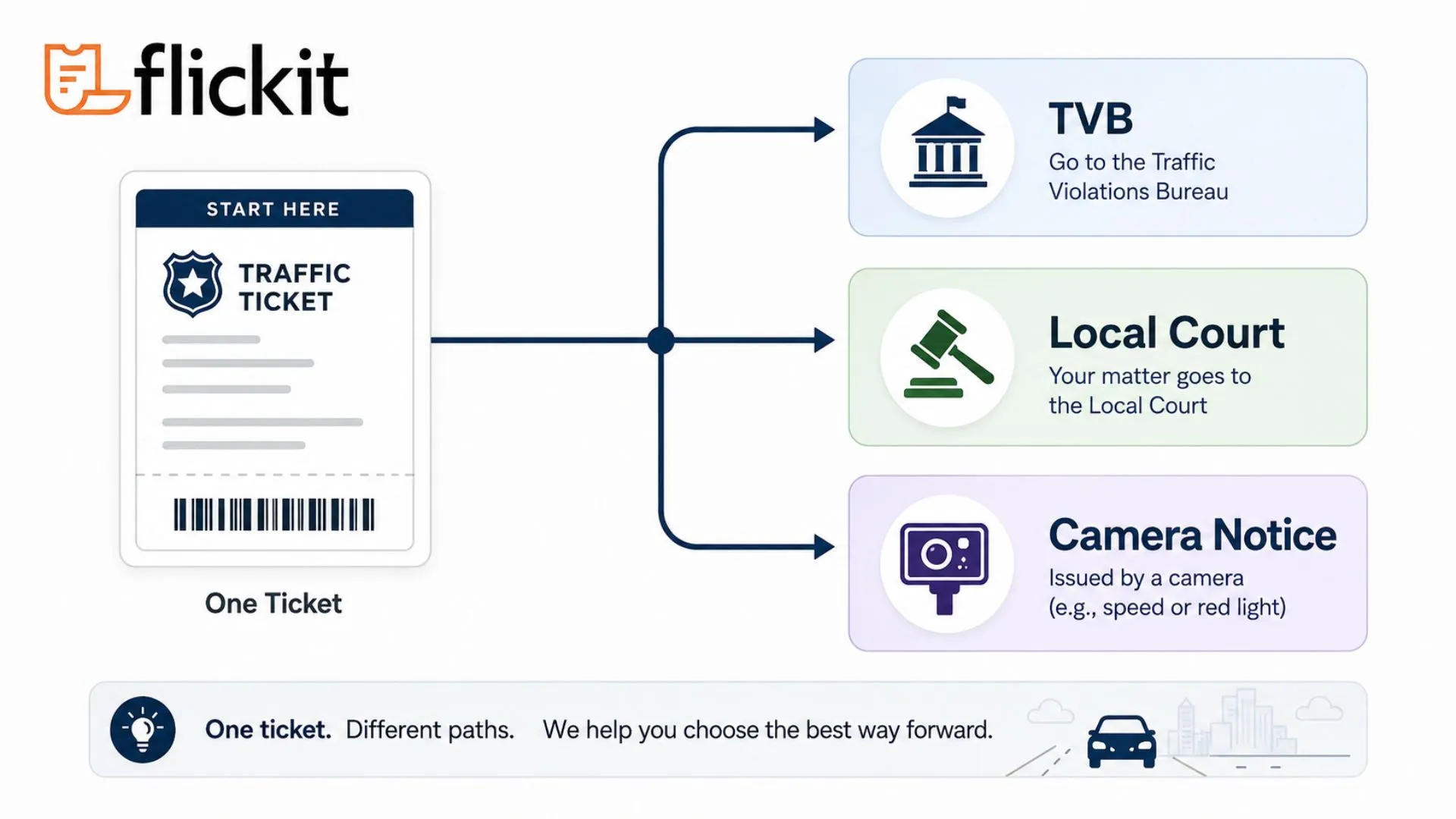
Flickit helps drivers handle traffic tickets without taking on the whole process alone. If you received a NY VTL 1111 D1 ticket, you can upload it to Flickit, explain what happened, and let the team review the situation.
That review can include the ticket details, officer-issued evidence, possible errors, and the driver’s best available options. We think this matters most when the driver is worried about points, insurance, court time, or making the wrong plea decision.
Flickit’s red-light ticket help is built around convenience and real human support. The goal is to help you understand the next move before you simply pay the ticket and accept the consequences.
Before paying a NY VTL 1111(d)(1) ticket, upload it to Flickit and get help figuring out what makes sense for your case.

 Call Now
 Whatsapp us