Getting a traffic or parking ticket is stressful enough, but the consequences can last longer than most drivers expect. Tickets can affect your driving record, your insurance rates, and even your future legal standing. In this article, we break down typical timeframes for different types of tickets, explore state-specific rules, and share practical strategies to protect your record and avoid unnecessary insurance hikes.
What Does a Ticket on Your Record Mean?
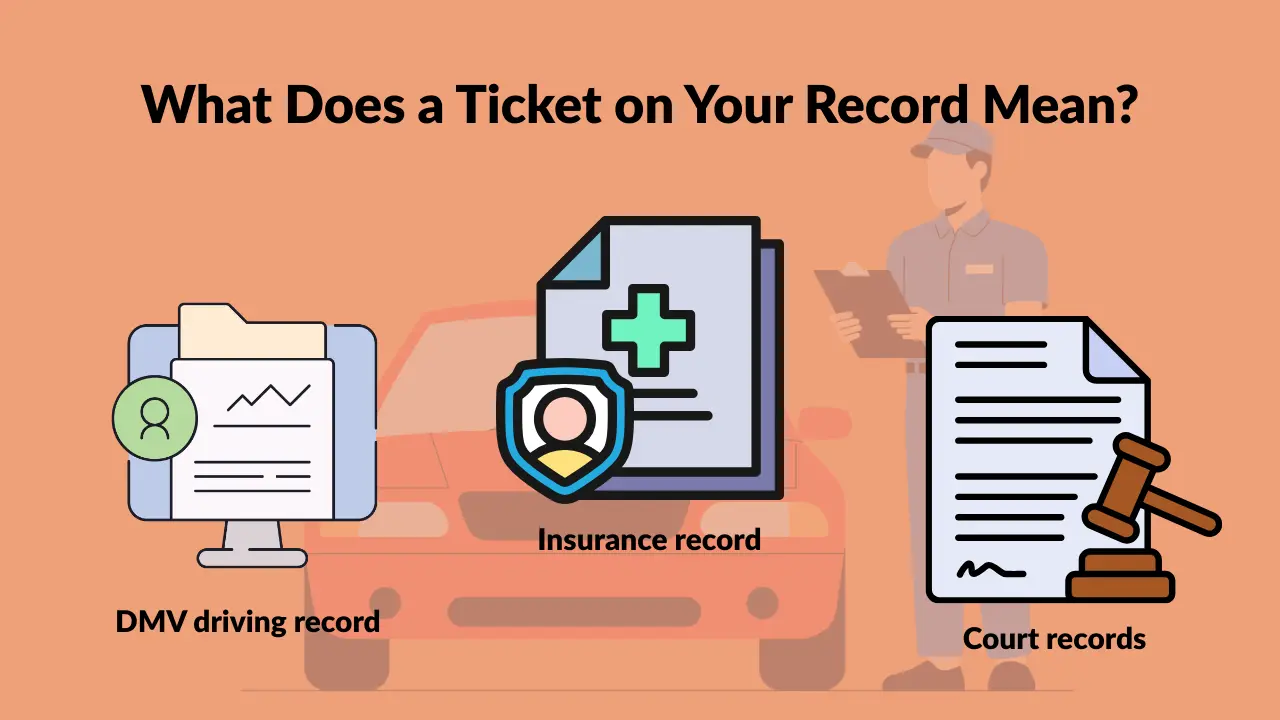
When we talk about a ticket being on your record, there are three separate systems to consider:
- DMV driving record: The official record of your violations maintained by your state motor vehicle department. It affects points, license status, and is used by courts and law enforcement.
- Insurance record: Private insurers track violations for rate setting. Even after a ticket expires from your DMV record, it may still affect premiums for several years.
- Court records: Some violations remain permanently in court records, which may be accessible for legal representation even after the DMV record expires.
Understanding the difference is key to managing your ticket strategically.
How Long Tickets Stay on Your Driving Record
The length a ticket remains on your record depends on state law and the type of violation. Here are general ranges:
Minor Violations
Examples: Speeding under 15 mph over the limit, failure to signal
- DMV record: 3 to 5 years
- Insurance impact: 3 to 5 years
Moderate Violations
Examples: Running a red light, reckless driving
- DMV record: 5 to 7 years
- Insurance impact: 5 years or more
Serious Violations
Examples: DUI, hit and run, driving with a suspended license
- DMV record: 7 to 10 years, sometimes longer
- Insurance impact: 7 years or more, depending on the state
Tip: Always check your state DMV website for exact timelines. For New York, see NY DMV Driving Record Points.
How Tickets Affect Insurance
Insurance companies often look back three to five years, and sometimes longer, for serious offenses. Even after a ticket drops from your DMV record, it can remain visible to insurers. Factors affecting insurance impact include:
- Number of tickets on record
- Type and severity of the violation
- Your insurance company’s policies
- Overall driving history
Insurance-related strategies include:
- Maintaining a clean driving record after a ticket
- Considering usage-based or telematics insurance programs
- Checking for eligible discounts or bundling policies
- Comparing quotes across multiple insurers to find better rates
State-Specific Considerations
Like all cases, it can differ from state to state. Ticket durations differ by state:
- New York: Most moving violations remain on record for 3 to 4 years. Points are active for 18 months to 2 years, depending on severity.
- California: Minor violations stay on record for 1-3 years, major offenses like DUI remain for 10 years.
- New Jersey: Violations are recorded permanently, but points expire in 2 years for minor offenses and 5 years for more serious violations.
Always confirm with your local DMV to understand how your specific ticket will impact your record.
How to Keep a Ticket from Affecting Your Record
If your goal is to avoid points, court time, and insurance hikes, there are actionable steps:
Fight the Ticket
Plead not guilty and contest your ticket through the proper traffic court channels. Many tickets can be reduced or dismissed.
Use Professional Support
Services like Flickit Pro NYC parking or Trucking Pro ticket service provide guidance on preparing your defense and negotiating with prosecutors.
Consider Legal Assistance
For complex violations such as DUI or multiple offenses, hiring a traffic ticket attorney as your legal representation can protect your driving record and insurance rates.
How Long Tickets Stay on Your Record in Different States
Traffic violation retention periods vary widely by state because each state sets its own rules for how long a ticket stays on your driving record. In many cases, the time a ticket remains on record for DMV and insurance impact can be different. Here are examples of how long tickets generally remain on record in a selection of states:
Shorter Retention States
- Alaska: About 1 year on record before the violation typically expires.
- Arizona: Around 1 year, although some states may retain records beyond the point period.
- Connecticut: Most minor violations are retained for about 3 years.
- Oregon: Around 3 years for many moving violations.
Moderate Retention States
- California: Standard moving violations generally stay on your driving record for about 39 months to 3 years.
- Florida: Most traffic tickets remain on record for about 5 years.
- Illinois: Tickets can appear on your record for about 4 to 5 years.
- Texas: Many moving violations stay on record for about 3 years.
Longer Retention or Permanent Record States
- Hawaii: Some violations may remain on your record for up to 10 years.
- Minnesota: A range of violations may stay for 5 to 10 years, depending on severity.
- Montana: Some states maintain violations permanently on the full driving record even if points eventually expire.
- Alabama, Nevada, and New Jersey: Some states keep certain convictions permanently on the historical record, often removing active points after a few years while keeping the violation visible in full records.
Key Things to Know
- Point vs. conviction retention: Many states remove points associated with a ticket sooner than the underlying conviction disappears from the official driving record.
- Serious offenses: More serious violations, such as DUI or reckless driving, may remain on state driving records for 7 years, 10 years, or longer, depending on jurisdiction and state rules.
- Insurance view: Insurance companies typically “look back” at the past three to five years of your driving history when setting premiums, even if the official state record retains a violation longer.
Always check with the official state DMV where the violation occurred for your exact retention period, because these timelines can change based on state laws and the severity of the offense.
Ready To Fight Your Ticket?
Tickets remain on your record for varying lengths of time, depending on the violation and the state. Understanding how long your ticket stays and taking action early can save you from points, court appearances, and insurance hikes. At FlickIt, we help you fight your ticket, submit it quickly, and protect your driving record.

 Call Now
 Whatsapp us