You got pulled over, and now you’re wondering if the ticket was really about safety or just about numbers. That question is fair, especially when formal quotas are banned in many states, but informal pressure can still exist. And to be honest, the answer is not as simple as “yes” or “no.”
In this article, we’ll break down what quotas mean, why states are pushing back, and what you should do before simply paying a ticket. Let’s get started!
Traffic ticket quotas are required or expected numbers of tickets, stops, arrests, warnings, or public “contacts” an officer is supposed to make within a certain period. That can mean a written rule, an unspoken expectation, or a performance target that feels like a rule even when no one calls it one.
The key difference is intent.
A formal written quota says an officer must hit a number. An informal expectation may come through pressure from supervisors, comparisons with other officers, or repeated reminders about low activity. On the other hand, a normal activity report can simply track what an officer did during a shift.
The issue starts when numbers matter more than safety.
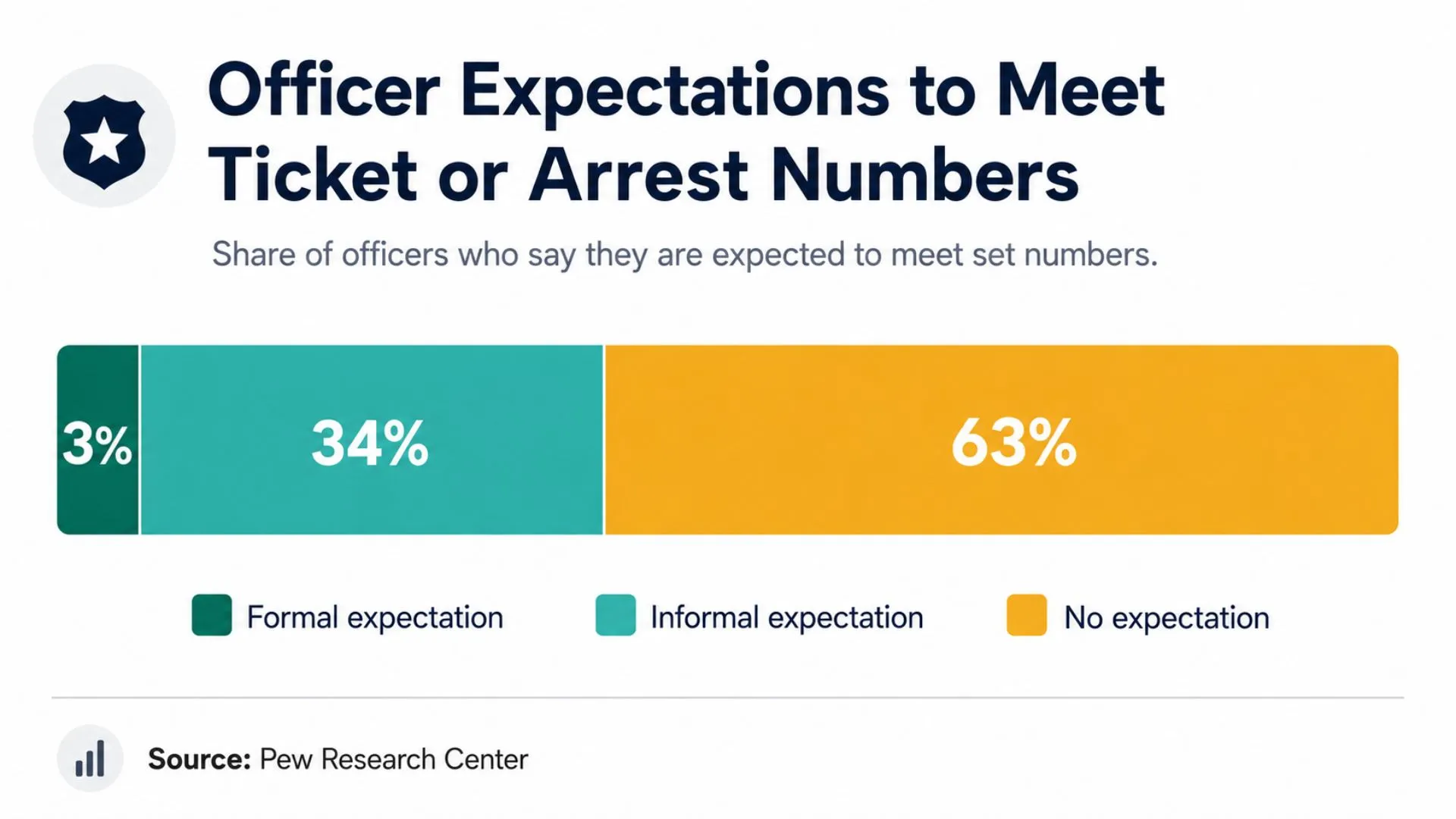
Pew Research Center found that 3% of officers reported formal quota expectations, while 34% reported informal expectations. That gap explains why drivers often hear “quotas are illegal” but still feel like something quota-like may be happening.
Police are not supposed to pull drivers over just to hit numbers. But some departments have used systems that create pressure to produce more stops, tickets, warnings, or contacts. That is why this topic keeps coming back.
The Stanford Open Policing Project says police pull over more than 50,000 drivers per day and more than 20 million drivers per year. With that many stops happening, even a small amount of quota-like pressure can affect a lot of people.
For example, a driver from Queens may get stopped near the end of the month and wonder if the officer was looking for a violation or just looking for activity.
That does not automatically mean the ticket is invalid. But it does explain why people ask, “Do police officers have quotas for tickets?”, especially when they see the same enforcement spots used again and again.
From our point of view, the better question is not whether every stop is quota-driven. It is whether your specific ticket was properly issued and worth challenging.
Formal police quotas are illegal or restricted in many states, but the exact rule depends on where the ticket was issued. USA Today reported that police ticket and arrest quotas are illegal in 27 states and D.C., which shows how widespread the pushback has become.
Still, asking “Are ticket quotas illegal?” only gets you part of the answer. Some state laws ban agencies from requiring a set number of citations. Others go further and restrict how ticket counts can be used in promotions, discipline, pay, or performance reviews.
The gray area is where things get messy.
A department may not have an official quota, but it may still track stops, warnings, arrests, and contacts in a way that pressures officers to produce numbers. For New York drivers, that distinction matters because the ticket still has deadlines, points, fines, and possible insurance consequences.
This issue is bigger than one traffic stop. When drivers believe tickets are being written to satisfy numbers, the entire system feels less fair. That frustration is one reason state lawmakers keep revisiting quota laws.
The ACLU says 70% of voters support limiting or ending police enforcement of some minor violations. That shows the public concern is not only about “getting out of a ticket.” It is about trust, priorities, and whether low-level enforcement is being used the right way.
These are the main reasons states and drivers are pushing back:
At Flickit, this is why we always tell drivers not to panic and pay a ticket before understanding what it means. A small-looking ticket can still create points, surcharges, and insurance problems later.
Many quota debates are really debates about wording. A department may never use the word “quota,” but it may still measure output closely enough that officers feel pressure. Pew found that 36% of rank-and-file officers reported informal expectations, compared with 29% of sergeants and 23% of administrators.
That matters because a police officer’s ticket quota may not appear as a written order. It can show up as a pattern, a comparison, or a performance discussion.
These are the terms readers should understand:
Contacts can mean traffic stops, warnings, assistance calls, business checks, or other interactions with the public. On paper, that can sound reasonable. The problem starts when contacts become a number that officers feel they must hit.
Station averages compare one officer’s output with the average output of a unit or station. If lower numbers lead to pressure, punishment, or poor reviews, the average can start acting like a quota.
Productivity goals are not automatically wrong. Police departments need some way to know whether officers are working. But they become controversial when ticket volume is rewarded more than judgment, safety, or fairness.
Speeding tickets are usually at the center of quota rumors because they are common, easy to issue in busy enforcement zones, and easy for drivers to understand. A police speeding ticket quota suspicion does not automatically make a ticket invalid. The real question is whether the stop, citation, and evidence were legally sound.
Drivers should check the posted speed limit, alleged speed, location, officer notes, radar or pacing method if listed, and court deadline. For example, a driver on the Grand Central Parkway may care less about quota rumors and more about whether the alleged speed was measured correctly.
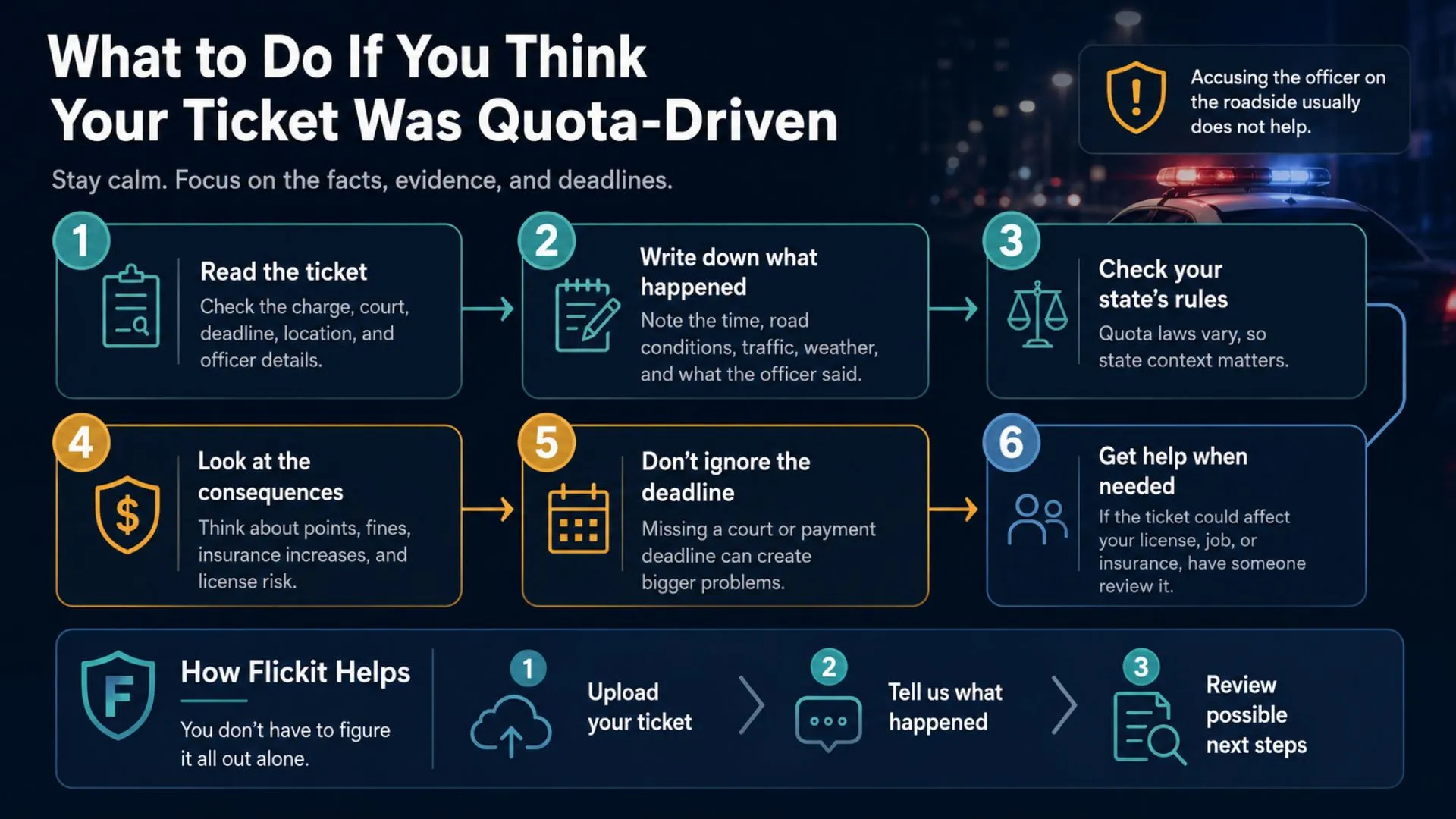
If you think your ticket was quota-driven, stay calm and focus on the facts after the stop. Accusing the officer on the roadside usually does not help. What matters most is what the ticket says, what the evidence shows, and what deadlines apply.
Here are the steps to take:
That is where Flickit can help. You upload your ticket to us, explain what happened, and get help understanding possible next steps without trying to figure out the whole process alone.
Flickit is built for drivers who want to fight or review a ticket without turning the process into another full-time job. Even if you suspect quota pressure, the stronger move is to understand the ticket itself.
For example:
Flickit helps drivers avoid guessing, so they do not just panic-pay and hope nothing happens later.
Police ticket quotas are usually banned on paper, but informal pressure can still be part of the debate. That does not mean every ticket is fake or every stop is quota-driven. It means drivers should look at the facts before deciding what to do
If you received a ticket in New York or another state and are unsure what it could mean, Flickit can help you review it and flick the stress off your plate. Contact us today to learn more!

 Call Now
 Whatsapp us