You may have let a partner, relative, employee, or friend use your car and found out later that their license was suspended. That surprise can lead to an NY VTL 511-a ticket, which may also appear as a reduced charge after a VTL § 511 accusation.
The stakes changed in 2026 because this offense can now carry DMV points. So, we’ll explain to you what the charge means, what prosecutors must prove, and what you can do next.
An NY VTL 511-a ticket alleges facilitating aggravated unlicensed operation of a motor vehicle.
In plain terms, New York generally uses this law when a vehicle is registered in your name. But you allow someone to drive while you know, or have reason to know, that the person’s license or New York driving privilege is suspended, revoked, or withdrawn.
You may encounter this code in one of two ways. The first is a direct charge against the registered owner after another person drives the vehicle. It can also appear as a negotiated reduction after a driver is charged with aggravated unlicensed operation under VTL § 511.
Pro tip: Learn how aggravated unlicensed operation charges work in our guide to AUO penalties, fines, and legal options.
The state must prove each required part of a VTL 511-a ticket. The ticket starts the case, but it does not prove the accusation by itself. DMV records, statements, and the surrounding facts all matter.
Here are the main elements.
Section 511-a focuses on the registered owner, so the registration record may become central. Someone may pay for the vehicle, insure it, or use it every day while another person appears on the registration. That difference can affect the charge.
The prosecution must connect the owner to the driver’s use of the vehicle. It may point to loaned keys, regular permission, or access the owner knowingly provided.
A car taken without permission creates a different issue. So does driving after the owner clearly withdrew permission.
The driver must have operated the vehicle on a place covered by New York’s broad public-highway definition. Also, the person’s license or legal driving privilege must have been suspended, revoked, or otherwise withdrawn at that time.
The state can try to prove knowledge through direct evidence or surrounding circumstances. Conversations about the suspension, earlier police stops, DMV notices, prior tickets, or known licensing problems may become important.
A close family or personal relationship does not automatically prove knowledge. The facts still have to support that conclusion.
Pro tip: Confirm your current driving status with our guide on checking a New York license suspension.
VTL 511-a penalties depend on the degree, the vehicle involved, and the incident date. Third degree is the version most private vehicle owners are likely to see.
Third degree contains the basic offense and can apply to an ordinary private passenger vehicle. Second and first degrees are limited to specified for-hire, tow-truck, bus, or commercial vehicles. They depend on particular prior convictions or qualifying suspension histories.
According to the New York Senate’s official VTL § 511-a text, here are the main penalty levels.
Tailgating or unsafe following distanceTailgating or unsafe following distance
| Degree | Classification | Main application | Fine | Possible incarceration |
|---|---|---|---|---|
| Third degree | Traffic infraction | Standard registered-owner allegation | $200-$500 | Up to 15 days |
| Second degree | Misdemeanor | Certain repeat cases involving listed commercial or for-hire vehicles | $500-$1,000, based on the subsection | Up to 60 or 180 days |
| First degree | Class E felony | Certain listed vehicles and extensive suspension history | $1,000-$5,000 | Penal Law sentence |
Beginning February 16, 2026, a facilitating aggravated unlicensed operation conviction carries five DMV points. It previously carried zero points, but the violation date controls which rule applies, so older online advice can be misleading.
Second and first-degree convictions also require revocation of the registration for the vehicle involved. A conviction generally also carries mandatory statutory surcharges and fees, with the precise amount depending on the proceeding and applicable law. For third-degree § 511-a, the maximum jail term is 15 days.
Pro tip: See how violations affect your record in our breakdown of the New York driver point system
VTL § 511 generally applies to the person who drives with suspended or revoked privileges. VTL § 511-a generally applies to the registered owner who permits that driving.
That is the basic difference, and it helps explain why two people connected to the same vehicle stop may face different allegations.
There is one practical wrinkle. A driver originally charged under § 511 may receive § 511-a as part of a negotiated resolution. That is why a person who was behind the wheel might see facilitating aggravated unlicensed operation in a plea offer or final court record.
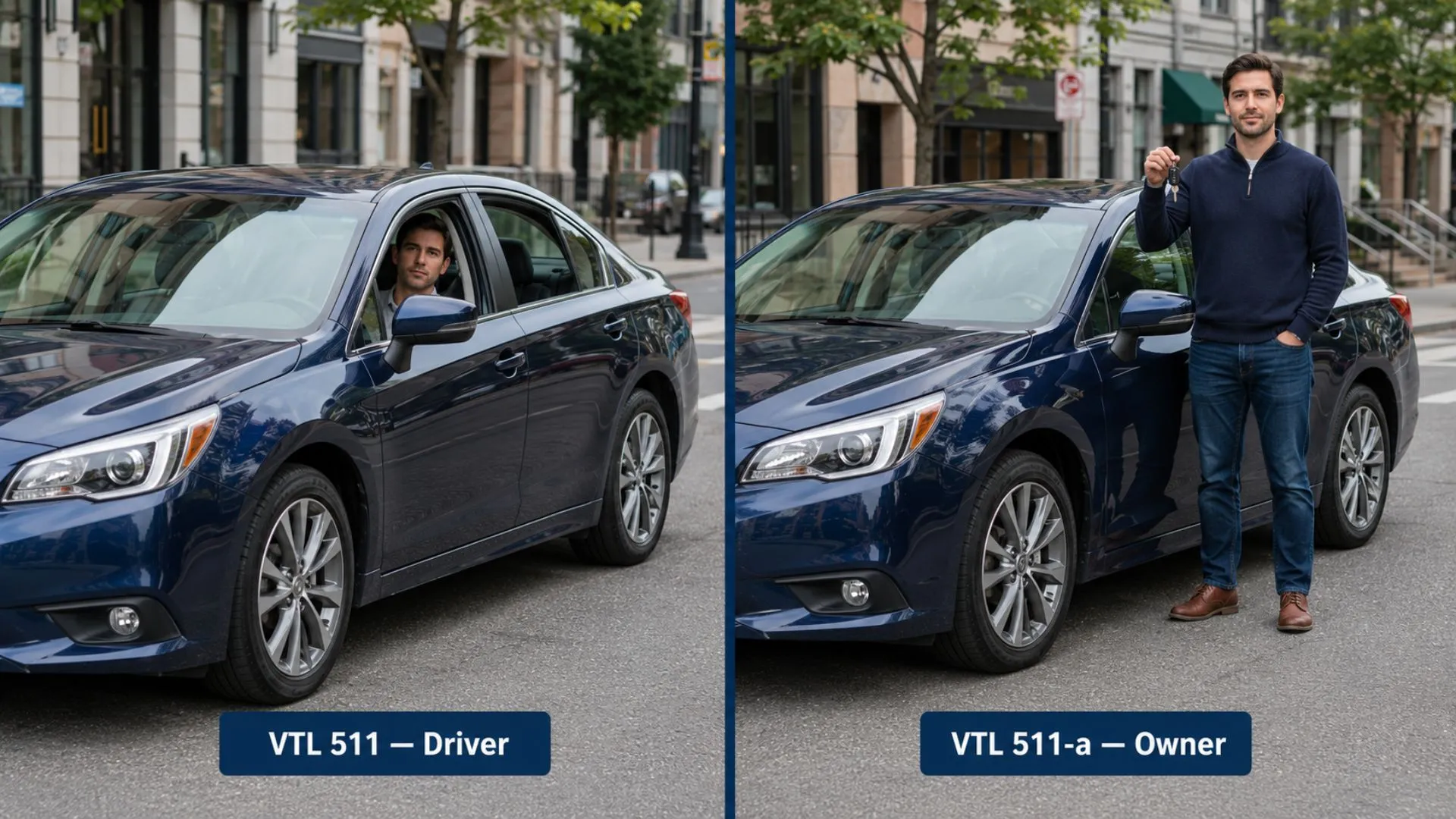
A VTL 511-a ticket commonly follows an owner’s decision to let someone with suspended or revoked privileges drive. Some cases are clear, but others turn on disputed permission, DMV records, or what the owner knew.
These are common situations:
Each case depends on its evidence. A familiar scenario does not prove guilt by itself.
After receiving a VTL 511-a ticket, confirm the charge, protect the evidence, and respond by the stated deadline. Your first steps can shape later options. We recommend a careful review before any plea.
You should follow this practical order:
1. Read the charge carefully: Confirm the subsection, incident date, court, return date, and how § 511-a entered the case.
2. Do not ignore the deadline: A missed response or appearance can cause fees, suspension consequences, or a default result.
3. Check the records: Confirm the name on the registration and the driver’s DMV status on the incident date.
4. Preserve useful evidence: Save permission-related messages, notices, witness details, and proof that the driver’s privileges had been restored.
5. Review the consequences before pleading: Older explanations may still call § 511-a a zero-point offense. That advice is outdated for incidents on or after February 16, 2026.
NOTE: These steps clarify the case, though none guarantee dismissal.
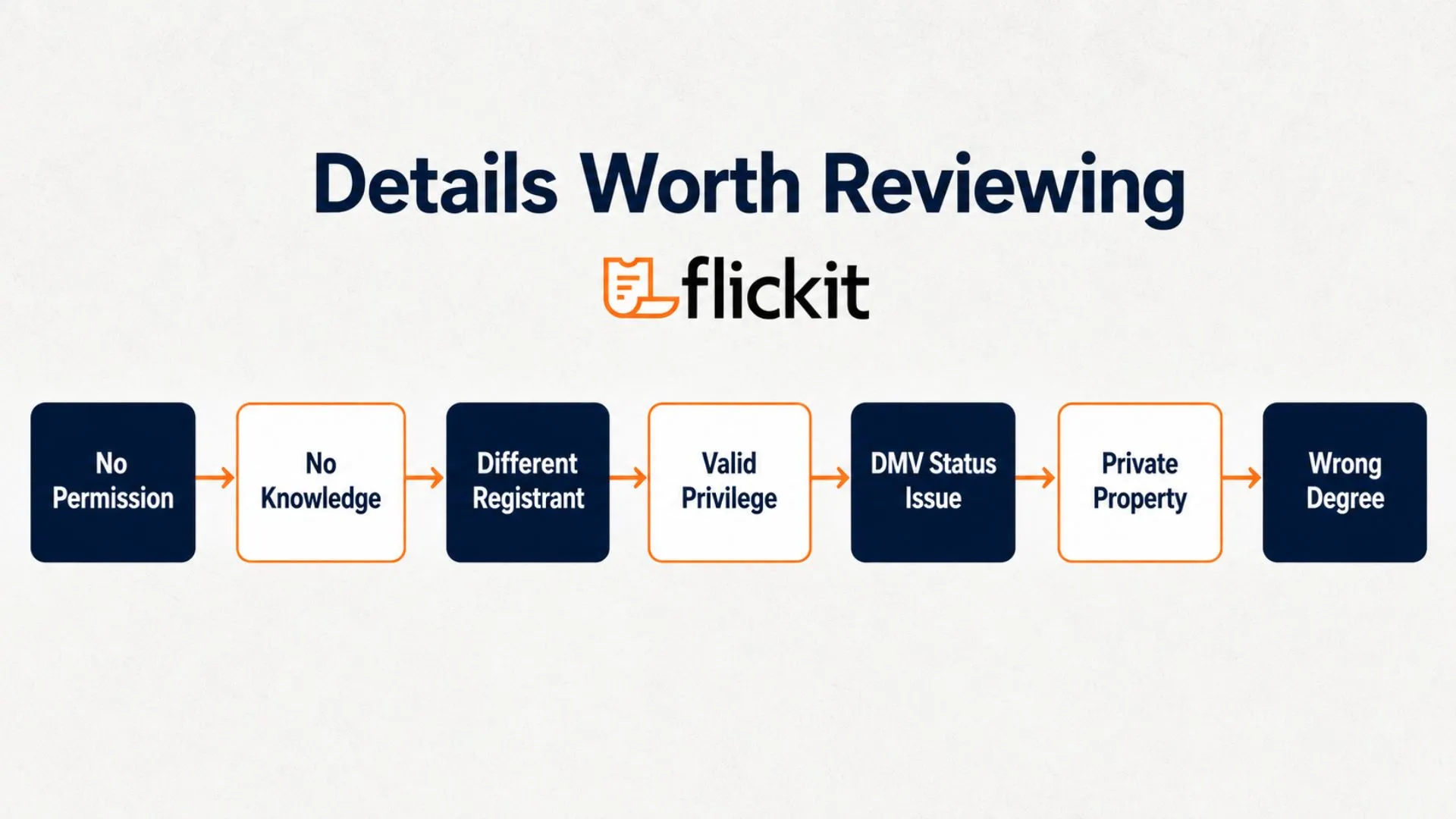
Possible defense issues include consent, knowledge, registration, license status, location, and the degree charged. We would review the records closely before drawing a conclusion. A small detail can change how the law fits the situation.
These are the main issues worth checking:
These are issues to investigate. Their value depends on the proof.
The court process depends on the degree and the place where the ticket was issued. A third-degree traffic infraction issued in New York City may go through the Traffic Violations Bureau.
Outside New York City, the local court listed on the ticket usually handles the matter. Second and first-degree allegations are criminal cases because they are a misdemeanor or felony.
Ignoring the ticket can lead to added fees, suspension consequences, or a default conviction at the TVB. Driving after a suspension can create another problem. So, follow the date and instructions printed on your ticket because general online deadlines may not match your case.
FlickIt can review your NY VTL 511-a ticket and help you understand the next step. You can upload the ticket online and share details about the vehicle, driver, permission, and license-status issue. FlickIt’s traffic-law team can examine the exact charge, review the facts, spot possible weaknesses, and explain your options.
When appropriate, our team may handle paperwork, negotiations, and court representation. You also receive human updates, so you do not have to manage every court communication alone.
Upload your ticket to FlickIt for a case-specific review before entering a plea or missing the response date. Results depend on the evidence, the court, and the circumstances of each case.

 Call Now
 Whatsapp us