A NY VTL 1225-D(1) ticket is issued when a driver is accused of using a portable electronic device while operating a motor vehicle. A conviction typically carries 5 points on your New York driving record, fines, state surcharges, and possible insurance increases.
Before paying the ticket, many drivers explore their options because the long-term cost of increased insurance premiums can outweigh the initial fine. Read on to learn what a NY VTL 1225-D(1) ticket means and what steps you can take next.
A NY VTL 1225-D(1) ticket is a distracted driving violation.
The law prohibits drivers from using a portable electronic device while operating a vehicle in New York.
Portable electronic devices include:
You may think that since it is okay to send that message while it is traffic. However, according to New York law, the violation applies even if the vehicle is temporarily stopped in traffic.
Many drivers think this is a minor cell phone ticket.
It is not.
A VTL 1225-D(1) conviction adds 5 points to your driving record, making it one of the more significant moving violations in New York.
A NY VTL 1225-D(1) ticket carries 5 points.
| Violation | Points |
|---|---|
| VTL 1225-D(1) Portable Electronic Device | 5 |
| Many Speeding Tickets (1-10 mph over) | 3 |
| Failure to Obey Traffic Device | 2 |
| Seat Belt Violation | 0 |
Five points from a single ticket can substantially affect your driving record.
For drivers who already have existing violations, those additional points may create licensing concerns.
New York’s distracted driving law covers more than just texting.
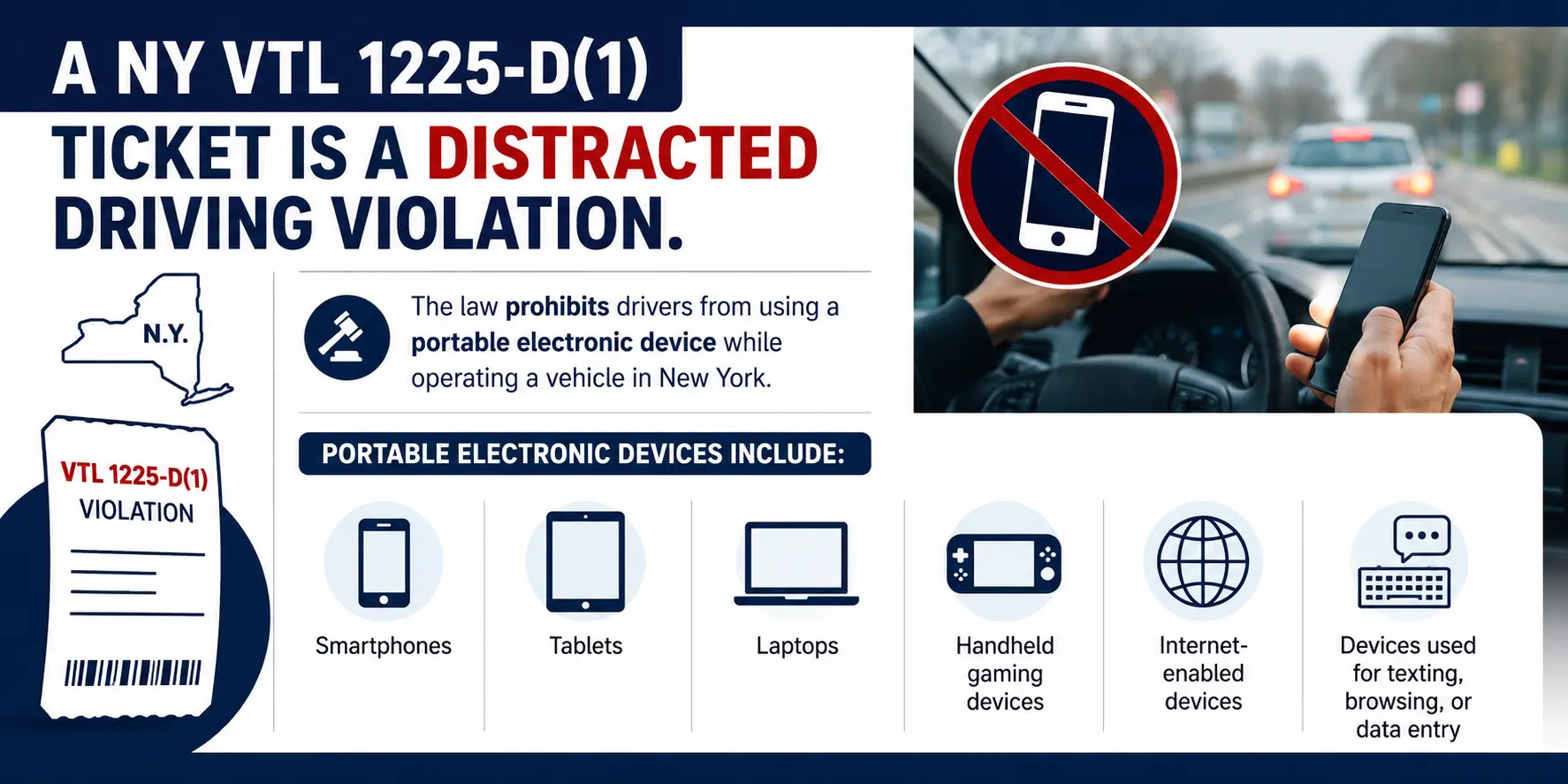
Examples include:
Many drivers receive a ticket because they believe a quick phone interaction is allowed.
If your citation specifically involves cellphone use, you may also want to learn more about New York cell phone tickets and how they are commonly handled.
In most situations, handheld use can still result in a citation.
Penalties vary based on driving history and court outcomes.
Potential consequences include:
| Consequence | Possible Impact |
|---|---|
| License Points | 5 Points |
| Court Fine | Varies |
| State Surcharge | Additional Cost |
| Insurance Rates | May Increase |
| Driving Record | Conviction Remains on Record |
The insurance increase is often the most expensive consequence.
Yes. Many insurance companies consider distracted driving violations a risk factor.
A conviction may lead to:
This is one reason many drivers seek traffic ticket solutions rather than automatically pleading guilty.
A court fine is usually a one-time expense.
An insurance increase can affect your costs for multiple policy periods.
For many drivers, the insurance impact becomes the largest financial consequence of the ticket.
Yes, drivers have the right to contest a VTL 1225-D(1) ticket.
Common defense issues may include:
The strength of any defense depends on the specific facts of the case.
Drivers dealing with tickets in multiple jurisdictions may also find our Guide to Traffic Tickets and Moving Violations by State.
A New York driver received a VTL 1225-D(1) ticket after briefly touching a smartphone mounted on the dashboard to adjust GPS directions. The officer believed the driver was actively using a portable electronic device while operating the vehicle and issued a citation.
After reviewing the violation, the driver learned that a conviction could add 5 points to their license and potentially increase insurance premiums. Rather than immediately paying the ticket, they decided to explore their options for disputing the charge.
This type of situation is more common than many drivers realize and highlights why understanding the full consequences of a VTL 1225-D(1) ticket is important before responding.
Not necessarily.Paying the ticket is generally treated as admitting guilt.
Before paying, you should review:
Understanding the full cost of the violation is important before making a decision.
Many drivers want to avoid spending hours dealing with court procedures.
Common reasons drivers seek help include:
Services may also assist with:
If you’ve received a NY VTL 1225-D(1) ticket, you don’t have to navigate the process alone. Flickit helps drivers submit tickets for review through a streamlined, hassle-free process designed to save time and reduce stress.
Drivers use Flickit for:
Upload your ticket now and submit it to Flickit for review. Whether you’re dealing with a distracted driving violation, speeding ticket, or parking citation, Flickit makes it easier to understand your options and take the next step with confidence.

 Call Now
 Whatsapp us