A NY VTL 1172(a) ticket means you were cited for failing to stop properly at a stop sign in New York. It may seem minor, but this type of traffic violation can lead to fines, DMV points, and insurance rate increases.
Many drivers assume a “rolling stop” is harmless, especially when the intersection looks clear. In practice, New York law focuses on whether you made a complete legal stop at the correct point, not whether the road appeared empty.
Under New York Vehicle and Traffic Law § 1172(a), a driver must stop at a stop sign before proceeding. Specifically, you must stop:
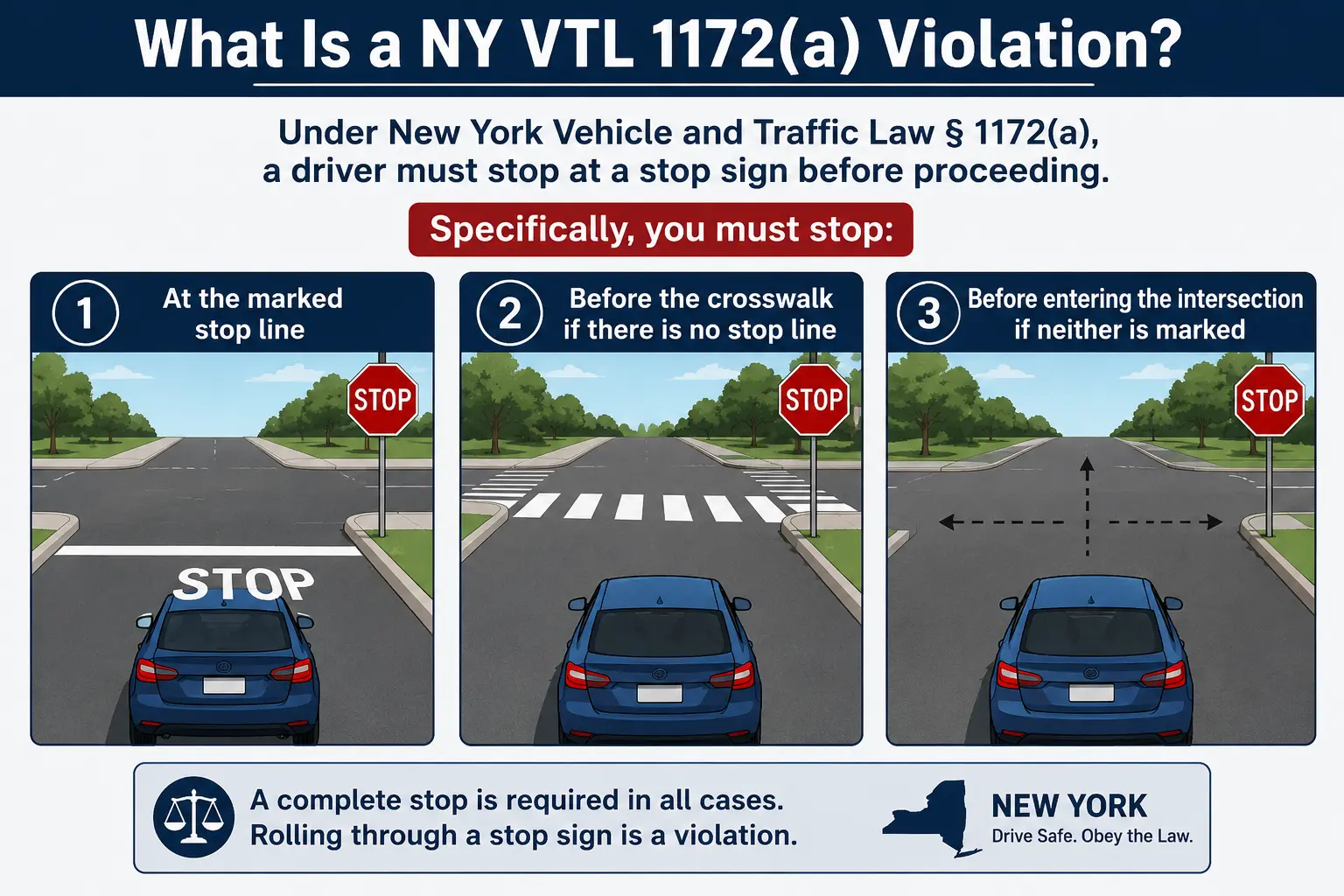
A slow roll usually does not count as compliance. Even if no other vehicles are present, an officer may still issue a ticket if they determine the vehicle never fully stopped.
This is one reason many drivers search for fight my ticket options immediately after receiving a citation.
These tickets often happen during ordinary driving situations, especially when a driver believes they stopped safely but not exactly where the law requires. Common examples include:
A conviction can result in:
New York DMV confirms that stop-sign violations generally carry 3 points, which can affect your driving history and future insurance rates.
That is why many drivers seek parking ticket help or speeding ticket defense providers for all moving violations, not just major offenses.
The ticket itself may not be the most expensive part. For many drivers, the bigger financial impact comes later through higher insurance costs.
Insurance companies often review your driving history when determining rates, and even a single moving violation can affect how much you pay at renewal.
They typically look at factors such as:
A single stop-sign ticket can raise premiums, especially when combined with prior infractions. According to industry resources from Progressive and GEICO, moving violations can remain a rating factor for several policy cycles.
That makes avoiding points just as important as reducing the fine.
Yes. Many drivers dispute a NY VTL 1172(a) ticket when the situation is not as clear as it seems on paper. Since these cases often rely on an officer’s observation, small details can make a difference.
Possible arguments may include:
In many cases, photos, dashcam footage, and witness statements can help support a dispute.
This is where white-glove ticket service providers can simplify the process by helping gather documents, identify procedural issues, and connect users to legal options.
Traffic court can be confusing, especially when deadlines are involved and the process varies depending on where the ticket was issued. Many drivers are unsure whether they should pay the fine, dispute it, or seek legal guidance, and waiting too long can limit those options.
That is why many drivers use services like FlickIt to simplify the process. It can help you:
A NY VTL 1172(a) ticket is more than a stop-sign fine. It can affect your license points, insurance costs, and driving record. If you recently received one, reviewing your options early may help reduce the long-term impact.
The best first step is simple: submit your ticket now and get it reviewed before making a decision.
The real question is not whether the road looked empty.
It is whether the stop met the exact legal standard the officer observed.

 Call Now
 Whatsapp us